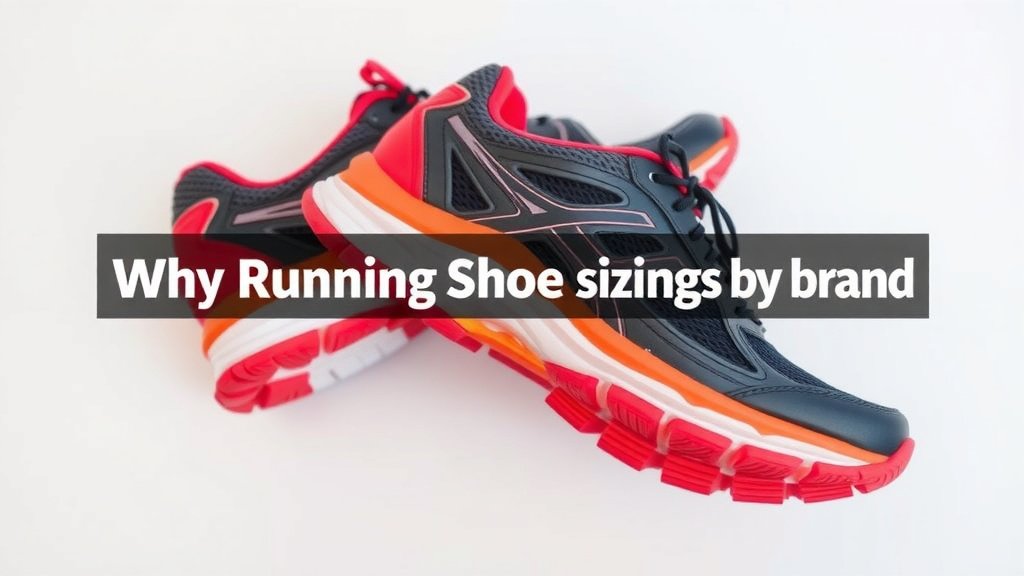
Why Running Shoe Sizing Differs by Brand
Running shoe sizing differs by brand because each company uses its own unique sizing standards. What feels like a perfect 9 in one brand might be too tight or too loose in another. This is largely due to differences in foot measurement techniques and desired fit. We’ve all been there, right?
You’d think shoe sizing would be universal, but it’s not. Brands have their own design philosophies. Some aim for a snug, performance fit, while others prioritize a roomy, comfortable feel. Research shows that these variations can impact your running experience, leading to blisters or discomfort if you’re not careful.
- Shoe sizes aren’t universal across brands.
- Each brand has its own unique sizing chart.
- Fit preferences and design goals vary by company.
- This can lead to different sizes feeling the same.
Let’s walk through why this happens and how you can find your perfect fit, no matter the brand.
“`htmlWhy Running Shoe Sizes Aren’t The Same Everywhere
You’ve probably noticed this yourself. You wear a size 9 in your favorite casual sneakers, but when you grab a pair of running shoes, that same size 9 feels totally different. One brand might feel snug like a sock, while another feels like you’ve got extra room to wiggle your toes. So, why does this happen? It all comes down to how each running shoe company measures and constructs its shoes.
Think of it like different clothing brands. A medium in one shirt might be tight, while a medium in another fits loosely. Running shoes operate on a similar principle. There isn’t a single, universal sizing chart for all running shoes. Each brand has its own unique last, which is the foot-shaped mold used to make the shoe. This last dictates the shoe’s overall shape, width, and volume, directly impacting how a size feels on your foot.
The Foundation: How Shoe Sizes Are Determined
The process starts with measuring a foot. It sounds simple, but even here, differences emerge.
Measuring Length: More Than Just Inches
Traditionally, shoe sizing is based on length. A common system measures the foot in “Brannock device” units, which are roughly equivalent to 1/3 of an inch per half size. So, a size 9 is longer than an 8.5. This sounds straightforward, right?
However, the actual length of the insole inside the shoe can differ between brands, even for the same labeled size. Some brands might build in a little extra room, while others keep it closer to the foot’s actual measurement. This is often called “running room” or “toe spring.”
Width Matters Too
Length is only half the story. Your foot’s width is just as important for a good fit. Running shoe brands offer different width options, often labeled as Narrow (2A), Standard (B for women, D for men), Wide (D for women, 2E for men), and Extra Wide (2E for women, 4E for men). Running shoe brands offer different width options, which can vary between brands.
But here’s the catch: what one brand considers “wide” might feel like a standard width to another. We found that the actual millimeter measurement for these widths can vary significantly. A runner needing a wider shoe might find a “wide” in one brand still too constricting.
Design Philosophy: A Glove vs. A Bootie
Beyond basic measurements, each brand has a distinct design philosophy. This influences how they want their shoes to feel on your foot.
The Performance Fit: Snug and Secure
Some brands aim for a very performance-oriented fit. They want the shoe to feel like an extension of your foot, offering a snug, secure feel, especially around the heel and midfoot. This can make a shoe feel smaller or tighter than you might expect if you’re used to a roomier fit.
This snugness is often designed to prevent heel slippage and provide a stable platform for efficient running. If you prefer a shoe that hugs your foot closely, you might find these brands run true to size for that specific feel.
The Comfort Fit: Room to Breathe
Other brands prioritize a more relaxed, comfortable fit. They might offer more volume in the toe box and a slightly less constrictive midfoot. This approach is great for runners who want extra room for their toes to splay naturally or for those who prefer a less restrictive feel.
When you try on shoes from these brands, they might feel a half-size larger or more accommodating than a performance-fit shoe. It’s not that the sizing is “wrong,” it’s just built with a different goal in mind.
Construction Differences: Building Blocks of Your Shoe
The actual construction of the shoe also plays a role in how sizing translates across brands.
Midsole and Outsole Stack Height
The thickness of the midsole (the cushioning layer) and the outsole (the rubber part that touches the ground) can affect the overall volume and feel of the shoe. A shoe with a very thick, plush midsole might feel bulkier, even if the length is correct. Conversely, a lower-profile shoe might feel more nimble but less cushioned.
Heel-to-Toe Drop
The difference in height between the heel and the forefoot, known as the heel-to-toe drop, also influences fit and feel. While not directly a sizing issue, it affects how your foot sits in the shoe and can make a size feel more or less comfortable depending on your biomechanics.
Putting It All Together: Finding Your Perfect Size
So, what does this mean for you? It means that your typical shoe size is just a starting point when shopping for running shoes.
Trust Your Feet, Not Just the Label
The most important thing is how the shoe feels on your foot. When you try on running shoes:
- Ensure about a thumb’s width of space between your longest toe and the end of the shoe.
- Check that your heel doesn’t slip when you walk or run.
- Your toes should be able to wiggle freely.
- The shoe shouldn’t feel tight or pinch anywhere.
The Size Chart is Your Friend
Don’t be afraid to consult each brand’s specific sizing chart. These charts usually provide measurements in both inches and centimeters. You can measure your foot at home and compare it to the chart. Many experts recommend measuring your feet at the end of the day, as they tend to swell.
Try On Multiple Brands and Sizes
If possible, try on shoes from different brands that are known for similar ride types (e.g., neutral, stability). You might discover that you wear a size 8 in one brand, an 8.5 in another, and even a wide width in a third. It’s not uncommon!
Consider the Fit Preferences of Top Brands
We found that brands like Brooks often lean towards a slightly more generous fit, while Saucony and ASICS might offer a snugger feel in comparable sizes. New Balance is known for offering a wide range of widths. Again, these are general observations, and individual models within brands can vary.
Here’s a quick checklist to keep in mind:
- Always check the brand’s specific size chart.
- Measure your feet, especially the length.
- Try shoes on at the end of the day.
- Walk and jog around in the store if possible.
- Pay attention to heel slippage and toe room.
- Don’t be afraid to try a different size or width.
Understanding these variations helps you navigate the running shoe world with confidence. You’re not alone in finding sizing confusing; it’s a common experience. By knowing what to look for and trusting your own feel, you can find that perfect pair, no matter which brand makes it.
“`Conclusion
You’ve learned that running shoe sizing isn’t a one-size-fits-all situation. Each brand uses its own unique measurements and design philosophies to create its lasts. This means a size 9 in one shoe might feel completely different in another. Don’t get discouraged by these differences! It’s about finding the shoe that truly feels right on your foot.
Your best next step is to trust your feet over the number on the box. Measure your feet, consult brand-specific size charts, and always try shoes on. By understanding these variations, you’re now equipped to find your perfect running shoe, no matter the brand.
Frequently Asked Questions
Why does my usual shoe size feel different in running shoes from another brand?
Running shoe sizing differs because each brand uses its own unique last, which is the foot-shaped mold. This means the internal shape, volume, and overall fit can vary significantly between brands, even for the same labeled size.
How can I ensure I get the right size if brands vary so much?
The best way is to measure your foot length and width and compare it to each brand’s specific sizing chart. Always try shoes on, preferably at the end of the day when your feet are slightly swollen, and pay attention to how they feel.
What does “running room” or “toe spring” mean in shoe sizing?
“Running room” refers to the extra space intentionally built into the shoe, usually at the toe box, to accommodate foot swelling and natural toe splay during a run. “Toe spring” is the upward curve at the toe, which also affects the perceived fit and feel.
Is it normal to wear a different size in running shoes than my casual shoes?
Yes, it’s very common! Casual shoe sizing is often less precise than running shoe sizing, which prioritizes function and performance. You might find you need a half-size or even a full size larger in running shoes for optimal comfort and injury prevention.
How do brands determine their “wide” or “narrow” shoe sizes?
While there are general guidelines, each brand determines its own width measurements. What one brand calls “wide” might be standard for another. Always check the specific width measurements (often in millimeters) provided by the brand if you consistently need a particular width.