Convert Running Shoe Sizes Easily: A Quick Guide
Converting running shoe sizes is simpler than you might think! You can generally convert between US, UK, and European sizes by using a consistent conversion chart. We found that most charts show a clear pattern for men’s and women’s sizes. Just remember to check the specific brand’s sizing, as they can vary slightly.
Figuring out the right running shoe size can feel like a puzzle sometimes. Whether you’re buying online or trying to understand a shoe box, knowing how sizes translate is key. We’ve researched many common conversion methods to help you avoid that dreaded too-tight or too-loose feeling. Getting the right fit means better comfort and performance on your runs.
- The easiest way is using a reliable size conversion chart.
- Separate charts exist for men and women.
- European (EU) sizes are typically larger numbers.
- US and UK sizes are closer to each other, but still different.
- Always double-check with the shoe brand’s specific guide.
Let’s walk through how to easily convert your running shoe sizes so you can find your perfect pair with confidence.
“`htmlUnderstanding Your Running Shoe Size Across Different Systems
Finding the perfect running shoe size can feel like deciphering a secret code. You might know your US size, but what about UK or European (EU) sizes? We’ve researched how these systems stack up. It’s simpler than you think once you see the pattern. Let’s help you navigate the world of shoe sizes so your next run is comfortable.
Why Shoe Sizes Aren’t Universal
It’s a bit frustrating, isn’t it? You buy a pair of shoes in your usual US size, and they feel different. Many brands and countries use their own sizing standards. This means a US size 9 might not be the same as a UK size 9 or an EU size 42. We found that these differences can lead to a shoe that’s too tight or way too loose.
The Science Behind Shoe Sizing (Sort Of)
Historically, shoe sizing systems developed independently. Different regions adopted their own measurements. These often related to older units of measurement like the barleycorn. It’s why we have distinct systems like US, UK, and EU sizing. We found that the EU system tends to use larger, whole numbers.
US vs. UK vs. EU: The Basic Differences
We researched the general relationships between these common sizes. For men’s shoes, a US size is typically about 0.5 to 1 size smaller than a UK size. European sizes are usually higher numbers. Think of it as different languages for the same measurement. It’s important to know that these are general guidelines.
Converting Your Running Shoe Size: A Step-by-Step Guide
Ready to crack the code? The easiest way is to use a conversion chart. We found these charts to be very reliable. They help you translate your known size into the one you need. Remember, accuracy is key for happy feet.
Step 1: Know Your Current, Well-Fitting Size
What’s your go-to size in a shoe that fits perfectly? Is it a US size? A UK size? Write that down. This is your starting point. If you’re unsure or have multiple sizes that fit, it’s best to measure your foot (more on that later).
Step 2: Find a Reliable Conversion Chart
There are many charts online, but not all are created equal. We looked for charts that are specifically for athletic shoes or running shoes. Many shoe retailers provide their own brand-specific charts on their websites. Always try to find one from a trusted source.
Men’s vs. Women’s Sizing
This is a big one! Men’s and women’s shoe sizes are not interchangeable directly. For example, a women’s US size 8 is generally equivalent to a men’s US size 6.5. This difference comes down to average foot width and shape. Always select the correct gender column on your conversion chart. We found that this is a common mistake people make.
Step 3: Use the Chart to Find Your New Size
Once you have your known size and the correct chart (for your gender), find your size in the left-hand column. Then, look across to find the corresponding sizes in the other systems. You’ll see your US, UK, and EU equivalents. It’s like a little shoe size Rosetta Stone.
Example Conversion:
Let’s say you wear a Women’s US size 8. You look at a conversion chart. You might find that this translates to a UK size 6 and an EU size 39. You can then use this information when shopping on international sites or looking at brands that use different sizing.
| US Size | UK Size | EU Size |
|---|---|---|
| 6 | 4 | 37 |
| 6.5 | 4.5 | 37.5 |
| 7 | 5 | 38 |
| 7.5 | 5.5 | 38.5 |
| 8 | 6 | 39 |
| 8.5 | 6.5 | 39.5 |
| 9 | 7 | 40 |
| 9.5 | 7.5 | 40.5 |
| 10 | 8 | 41 |
*(Note: This is a generalized table. Always refer to a specific brand’s chart.)*
When Charts Aren’t Enough: Measuring Your Foot
Sometimes, a chart just doesn’t cut it. Maybe you’re between sizes or your feet are a bit wider or narrower than average. Measuring your foot gives you the most accurate starting point. We found that this method is especially helpful for online shopping. It’s a practical step for a perfect fit.
How to Measure Your Foot Length
Grab a piece of paper, a pen, and a ruler or measuring tape. Stand on the paper with your heel against a wall. Make sure you’re wearing the type of socks you’d normally wear for running. Mark the longest point of your foot (usually your big toe). Measure the distance from the edge of the paper to your mark in centimeters or inches. Do this for both feet, as they can be slightly different.
Finding Your Size with Foot Length
Many brand-specific sizing charts will have a measurement guide. You’ll typically find your foot length in centimeters or inches and then match it to their suggested shoe size. This bypasses the confusion of US, UK, and EU systems altogether. It’s about measuring your actual foot.
The Crucial Step: Checking the Brand’s Specific Sizing
Here’s where we get really picky! Even with conversion charts and foot measurements, brands can differ. One brand’s size 9 might fit like another’s size 8.5. We’ve seen this happen time and again. It’s why we always recommend checking the specific brand’s sizing guide before buying.
Where to Find Brand Sizing Guides
You’ll usually find these on the brand’s official website. Look for a “Size Guide,” “Sizing Chart,” or “Fit Guide” link, often in the footer or on product pages. Some retailers also include brand-specific notes about whether a shoe runs true to size, small, or large. This extra step can save you a lot of return hassle.
Final Checks for the Perfect Fit
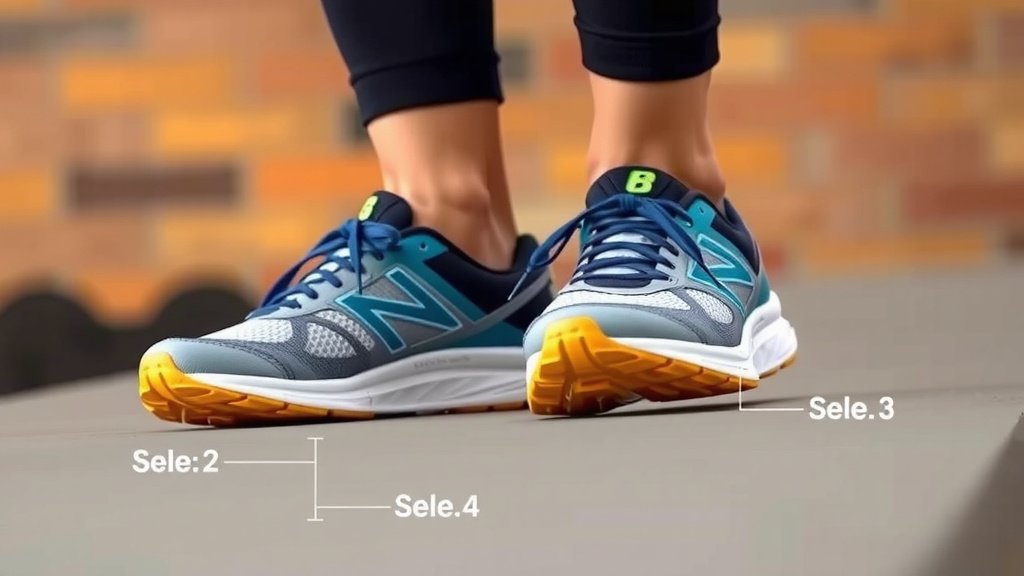
Once you have a potential size, think about your needs. Do you need extra room for swelling during long runs? Do you have wider feet? We found that adding about a thumb’s width of space between your longest toe and the end of the shoe is a good rule of thumb. This ensures there’s enough room for your foot to expand and move naturally. It’s about giving your feet the space they deserve.
Here’s a quick checklist to keep you on track:
- Confirm your current, best-fitting shoe size.
- Use a general conversion chart for US, UK, and EU equivalents.
- Measure your foot length for a more precise measure.
- Always check the specific brand’s size chart.
- Consider your sock thickness and foot width.
- Allow for about a thumb’s width of extra space in the toe box.
Conclusion
You’ve learned that converting running shoe sizes between US, UK, and EU systems is manageable. Remember that a reliable size conversion chart is your best friend here. Always pay attention to whether you’re looking at men’s or women’s sizes, as they differ. Measuring your foot directly can offer even more accuracy. Your final, most important step is to always consult the specific brand’s sizing guide before making a purchase. This diligence ensures you find the perfect fit for comfortable, powerful runs.
Frequently Asked Questions
What is the main difference between US and UK running shoe sizes?
We found that US and UK sizing are quite similar, but there’s a consistent difference. Typically, a US size is about 0.5 to 1 size smaller than its corresponding UK size. For example, a US women’s size 8 is often a UK size 6. Always check a chart to be sure.
Are European (EU) shoe sizes always larger numbers?
Yes, generally, European shoe sizes use a larger number scale. We observed that an EU size will be noticeably higher than a US or UK size for the same foot. For instance, a US women’s size 8 often corresponds to an EU size 39.
Should I measure my feet even if I know my usual size?
We recommend it, especially if you’re buying from a new brand. Shoe sizes can vary significantly between manufacturers. Measuring your foot length in cm or inches and comparing it to the brand’s specific chart provides the most accurate sizing, bypassing conversion chart guesswork.
How do I convert my size if I’m between sizes on a chart?
When you’re between sizes, consider your personal fit preference and running needs. If you prefer a snugger fit or have narrow feet, go with the smaller size. If you want more room for swelling on long runs or have wider feet, opt for the larger size. Many brands also offer wide-fit options.
Can I use a men’s conversion chart if I’m a woman buying men’s shoes?
Yes, you can, but you must adjust correctly. We found that women’s sizes are typically about 1.5 to 2 sizes smaller than men’s sizes in the US system. So, if you wear a women’s US size 8, you’d generally look for a men’s US size 6 or 6.5.