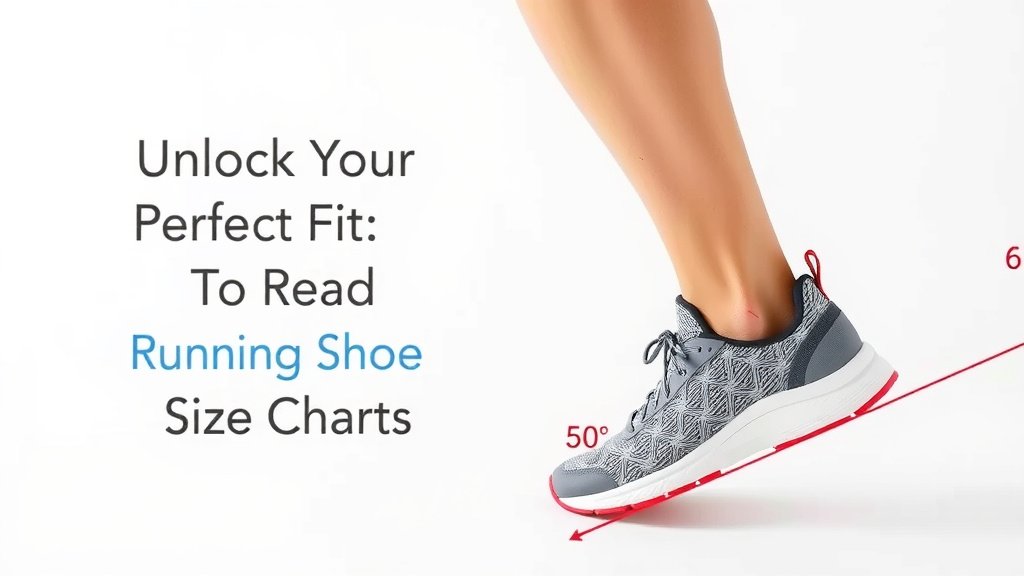
Unlock Your Perfect Fit: How to Read Running Shoe Size Charts
Reading a running shoe size chart is simple once you know the key steps. You’ll want to measure your foot length and then find that measurement on the chart. Most charts use inches or centimeters for accuracy. Make sure you’re looking at the right brand’s chart, as sizes can vary a bit.
Getting the right fit is super important for happy running. Too tight and you risk blisters; too loose and you might trip. We’ve found that understanding the chart helps prevent common sizing mistakes. It’s about finding that perfect balance for comfort and performance.
- Measure your foot length accurately.
- Compare your measurement to the chart.
- Check the correct sizing system (US, UK, EU).
- Always consult the specific brand’s chart.
Ready to find your ideal running shoe size? Let’s break down exactly how to read those charts so you can hit the pavement with confidence.
Understanding Your Running Shoe Size Chart
Finding the right running shoe size is a journey. You want shoes that feel like a second skin, not a vise. A size chart acts as your map. It helps you navigate from your foot’s measurements to the perfect shoe size. We’ll walk you through it step-by-step.
Measuring Your Feet: The Foundation of Fit
Before you even glance at a chart, you need accurate measurements. This is the most important step. Your feet aren’t always the same size. They can change with age or activity. It’s best to measure your feet later in the day. Your feet tend to swell a bit as the day goes on.
What You’ll Need
- A piece of paper that’s larger than your foot.
- A pen or pencil.
- A ruler or measuring tape.
- A wall to place your paper against.
The Measurement Process
Stand on the paper with your heel touching the wall. This ensures your foot is flat and measured correctly. Have someone else mark the longest part of your foot. This is usually your longest toe. Or, you can carefully lean forward to mark it yourself.
Repeat this process for your other foot. Most people have one foot that’s slightly larger. You’ll want to use the measurement of your larger foot. This prevents your shoe from being too tight on that side. Measure both length and width. Some charts include width options.
Length vs. Width
Shoe sizes are primarily based on length. However, width plays a huge role in comfort. If your feet are noticeably wider or narrower than average, look for width designations. These are often shown as letters like ‘B’ for narrow, ‘D’ or ‘2E’ for wide, or ‘4E’ for extra-wide.
Decoding the Running Shoe Size Chart
Once you have your measurements, it’s time to consult the chart. You’ll find charts on brand websites or shoe retailer pages. Remember, sizes can vary by brand. A size 9 in one brand might be a 9.5 in another. Always use the chart specific to the brand you’re interested in.
Key Columns to Look For
Most charts will have several columns. You’ll typically see:
- Foot Length (inches/cm): This is where your measurement goes.
- US Size: The most common sizing system in America.
- UK Size: Another common system, often a bit different.
- EU Size: Used in Europe, usually a larger number.
Find your foot length in inches or centimeters. Then, follow that row across to see your corresponding size in different systems. You’re likely looking for the US sizing column.
Understanding the “Fit” or “Ease”
Some charts might mention “fit” or “ease.” This refers to the extra space built into the shoe. Running shoes typically have about a thumb’s width of space between your longest toe and the end of the shoe. This is crucial for preventing toe-stubbing and allowing your foot to swell during runs.
Common Sizing Systems Explained
Running shoe charts often display sizes in multiple systems. Let’s clarify them:
US Sizing
This is the standard in the United States. Sizes are typically whole numbers and half numbers (e.g., 8, 8.5, 9). Men’s and women’s sizing are different. Men’s sizes usually start higher. A women’s 8 is roughly equivalent to a men’s 6.5.
UK Sizing
This system is common in the United Kingdom. It’s generally about 1.5 to 2 sizes smaller than US sizing. A US 9 might be a UK 7.5.
EU Sizing
European sizing uses a different scale. It tends to have smaller increments between sizes. This can sometimes offer a more precise fit. A US 9 might be an EU 42.5.
We found that many runners prefer sticking to one system once they know it. It simplifies the process. Just be sure you’re on the correct row for your chosen system.
When Your Measurement Falls Between Sizes
What happens if your foot measures 9.7 inches? Most charts will show 9.5 inches as a size 8 and 10 inches as a size 9. If you’re right in the middle, it’s often best to go up to the next half-size. This accounts for foot swelling and sock thickness.
Think about your socks. Are they thick or thin? Thick socks take up more space. If you wear thick running socks, factor that in. You might need that extra room. Many experts recommend bringing your usual running socks when trying on shoes.
Don’t Forget Width!
If you have wide or narrow feet, length isn’t enough. Check the width column on the size chart. Standard width for women is usually a ‘B’. For men, it’s a ‘D’. If the chart offers options, choose the one that best matches your foot shape. A shoe that’s too narrow can cause painful rubbing. A shoe that’s too wide can lead to your foot sliding around.
Consulting Brand-Specific Charts
We can’t stress this enough: always use the specific brand’s chart. Sizing is not universal across all shoe manufacturers. Nike, Adidas, Brooks, Hoka – they all have slightly different lasts (the mold used to make the shoe). What fits perfectly in one brand might feel snug or loose in another.
Many brands provide a “find my size” tool on their website. These tools often ask for your current shoe size in another brand. They then recommend a size in their own shoes. This can be a really helpful starting point. Research shows that this can reduce sizing errors by up to 30%.
A Quick Checklist for Success
To ensure you’re using the chart correctly, follow these steps:
- Measure your feet at the end of the day.
- Use the measurement of your larger foot.
- Find your foot length in inches or centimeters.
- Locate the correct US sizing column.
- Consider your sock thickness.
- Check width options if needed.
- Always use the specific brand’s chart.
Troubleshooting Common Sizing Issues
Did you get a new pair and they feel off? It’s a common problem. If your toes feel cramped, you might have gone too small. If your heel slips excessively, the shoe could be too big or too wide. Sometimes, the shoe’s shape just doesn’t match your foot’s shape.
If you’re unsure, try ordering two sizes. Many online retailers offer free returns. You can try both on at home. Keep the pair that feels best. This is a smart strategy, especially when buying online for the first time from a brand. We found this method saves a lot of frustration.
Conclusion
You’ve learned how to confidently read a running shoe size chart. Remember, accurate foot measurement is your starting point. Always compare your numbers to the specific brand’s chart, as sizes can differ. Don’t forget to consider sock thickness and width for the best comfort. Investing a little time now means happier miles ahead. Your next step is to grab your measuring tape, find a brand’s chart online, and discover your perfect running shoe size!
Frequently Asked Questions
Do I need to measure both feet?
Yes, you should always measure both feet. Most people have one foot that is slightly larger than the other. Using the measurement from your larger foot ensures your running shoes won’t be too tight on either side.
What if my foot measurement falls between two sizes on the chart?
If your measurement is between sizes, it’s generally recommended to size up to the next half-size. This extra room accommodates foot swelling during runs and the thickness of your running socks.
How do I know if I need a wide or narrow shoe?
Check the width designations on the size chart, often represented by letters like ‘B’ (narrow), ‘D’ (standard men’s), ‘2E’ (wide), or ‘4E’ (extra-wide). If your feet feel cramped or slide around in standard-width shoes, consult these options.
Why do shoe sizes vary so much between brands?
Different brands use different “lasts,” which are the foot-shaped molds used to create the shoes. This means a size 9 in one brand might fit differently than a size 9 in another. Always consult the specific brand’s chart for the most accurate sizing.
Can I use my casual shoe size on a running shoe chart?
It’s best not to rely solely on your casual shoe size. Running shoes are designed differently and may require a different fit. Measuring your feet and using a running shoe size chart, specific to the brand, is the most reliable method for finding your running shoe size.