Low Drop Running Shoes Explained: Find Your Perfect Fit
A low drop running shoe is designed with a small difference between the height of the heel and the forefoot. This is often called heel-to-toe offset. Most shoes have a drop of 8-12mm, but low drop shoes are typically 0-6mm. This design can promote a more natural foot strike.
Many runners wonder if low drop shoes are right for them. They are often associated with a midfoot or forefoot strike pattern. Research and runner feedback suggest they may help reduce impact on the heel. Some runners find them helpful for improving running form and efficiency. We found that understanding your foot mechanics is key.
- Low drop shoes have a small difference in height between heel and forefoot (0-6mm).
- This contrasts with traditional shoes that often have an 8-12mm drop.
- They can encourage a more natural foot strike, landing on your midfoot or forefoot.
- Some runners report benefits like reduced impact and improved form.
- It’s important to consider your personal running style and any previous injuries.
Below, we’ll break down exactly what a low drop running shoe is and what you should know before trying a pair.
Understanding Your Running Shoe’s Drop
You’ve probably noticed that running shoes aren’t all built the same. One key difference is how they’re constructed from heel to toe. This difference is called the “drop.” Think of it like a ramp for your foot. Some ramps are steep, while others are almost flat. Your running shoe’s drop is essentially that ramp angle.
Traditional running shoes often have a more significant drop, usually between 8 and 12 millimeters. This design has been around for a long time. It’s what most runners are used to. The idea was to cushion the heel strike. It aims to absorb some of the shock when your heel hits the ground first.
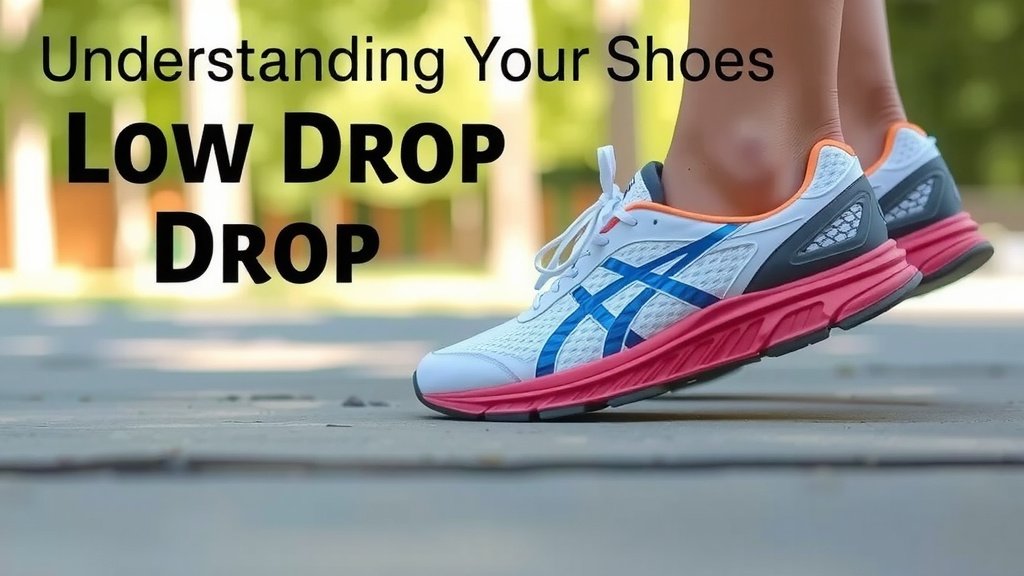
On the other hand, low drop running shoes have a much smaller difference. We’re talking about 0 to 6 millimeters. This means the heel and the forefoot are nearly at the same level. This design aims to create a more natural feeling underfoot. It can encourage a different way of landing when you run.
How Shoe Drop Affects Your Stride
The drop in your running shoe can influence how your foot makes contact with the ground. This is often called your foot strike. It’s a pretty big deal in the running world, and there’s a lot of discussion about it.
The Traditional Heel Strike
With shoes that have a higher drop, you’re more likely to land on your heel. Your heel hits the pavement first, and then your foot rolls forward. This can feel comfortable to many runners, especially those who are used to it. It can feel like a soft landing for your heel.
The Low Drop and Natural Foot Strike
Low drop shoes tend to encourage a midfoot or forefoot strike. Instead of your heel hitting first, the middle or front part of your foot lands. Imagine landing like a cat – quiet and balanced. This strike pattern is often seen as more natural by some experts. They believe it aligns with how humans ran before modern shoes existed.
When you land on your midfoot or forefoot, your body’s natural cushioning systems can engage. Your ankle and calf muscles work more. This can potentially reduce the jarring impact on your joints. Many runners find this feels more efficient and less stressful on their legs.
Benefits Runners Report from Low Drop Shoes
Many runners who switch to low drop shoes report positive changes. These aren’t guarantees, of course. But they are common experiences. We found that consistency is key when trying something new.
Potential for Reduced Impact
One of the most cited benefits is a reduction in impact. When you land with a higher drop, the initial shock can travel up your leg. With a lower drop and a midfoot strike, that shock is distributed differently. Your muscles and tendons act more like natural shock absorbers. This can feel gentler on your knees and hips.
Improvements in Running Form
Lower drop shoes can subtly guide you towards better posture. They might encourage you to run with a slightly more upright stance. Some runners also find they land with their feet more underneath their body. This is often seen as a more efficient way to run. It can reduce overstriding, which is when your foot lands too far in front of you.
Feeling More Connected to the Ground
Because the cushioning is more balanced, you often feel more connected to the surface you’re running on. This sensory feedback can be helpful. It allows you to adjust your stride more intuitively. You might feel lighter on your feet. It can feel like your shoes are an extension of your body.
Things to Consider Before Making the Switch
Switching to low drop shoes isn’t always a simple swap. Your body needs time to adjust. Rushing the process can lead to issues. We found that patience is a runner’s best friend here.
The Importance of Gradual Transition
Your muscles and tendons will need to get used to the new demands. Suddenly switching from a high drop to a zero-drop shoe can overload your calves and Achilles tendons. Many experts recommend a Our guide on how to run in zero drop shoes safely explains the importance of a gradual transition.gradual transition. Start by wearing them for short runs. Then, slowly increase the mileage. This allows your body to adapt safely.
Understanding Your Body and Injury History
It’s vital to listen to your body. If you have a history of certain injuries, like Achilles tendonitis or plantar fasciitis, proceed with caution. Some research suggests that lower drop shoes might put more stress on the Achilles tendon. However, other studies indicate they can help with certain types of knee pain. Consulting with a physical therapist or a running specialist can be very helpful. They can assess your biomechanics and provide personalized advice (American Physical Therapy Association).
The Role of Strength Training
To fully benefit from low drop shoes, strengthening your lower legs is important. Exercises that target your calves, ankles, and feet can help. Building strength here supports the increased workload that comes with a midfoot or forefoot strike. Good strength training can prepare your body for the change.
Low Drop vs. Zero Drop: A Quick Look
You might hear the terms “low drop” and “zero drop” used interchangeably. While they are similar, there’s a slight distinction. Understanding this can help you choose.
| Drop Category | Heel-to-Toe Offset (mm) | Common Foot Strike Encouraged | Typical Feel |
|---|---|---|---|
| High Drop | 8-12+ | Heel Strike | Cushioned heel, can feel less connected |
| Low Drop | 4-7 | Midfoot Strike | Balanced cushioning, more ground feel |
| Zero Drop | 0-3 | Forefoot/Midfoot Strike | Most natural, very connected to the ground |
As you can see, zero drop shoes are the most extreme end of the spectrum. They have virtually no height difference. Low drop shoes offer a middle ground, still providing some cushioning but encouraging a more natural landing. Your personal preference and what feels best for your feet are the most important factors.
Is a Low Drop Shoe Right for You? A Checklist
Making the decision to try low drop shoes can be exciting! Here’s a quick checklist to help you think it through:
- Have you experienced pain with traditional shoes?
- Are you interested in exploring a more natural foot strike?
- Do you have strong calf and ankle muscles?
- Are you prepared for a slow and steady transition period?
- Have you considered consulting a running professional or physical therapist?
- Does the idea of feeling more connected to the ground appeal to you?
Conclusion
Switching to low drop running shoes can be a great way to explore a more natural running stride. You’ve learned that these shoes have a minimal heel-to-toe difference, often encouraging a midfoot or forefoot landing. This can feel more efficient and potentially reduce impact. Just remember that a gradual transition is key. Listen to your body and consider strengthening your lower legs. If you’re curious about a more connected running experience, it might be time to try a pair. Your next step? Visit a local running store to feel the difference yourself.
Frequently Asked Questions
Will low drop shoes fix my running form?
Low drop shoes can encourage a more natural foot strike, which might improve your form. They often help you land more quietly and efficiently. However, they won’t magically fix all form issues on their own. You’ll still need to be mindful of your posture and stride.
How long does it take to get used to low drop shoes?
Transition times vary greatly between individuals. Some runners adapt within a couple of weeks, while others may take longer. Rushing the process can lead to injury. It’s best to start with short runs and gradually increase your mileage as your body adapts.
Can I wear low drop shoes if I have Achilles tendonitis?
Proceed with caution if you have a history of Achilles tendonitis. Low drop shoes can put more initial stress on the Achilles tendon and calf muscles. It’s highly recommended to consult with a physical therapist or running specialist before making the switch.
Are low drop shoes good for speed work or racing?
Some runners find that low drop shoes help them feel faster and more responsive during speed work. They can improve efficiency and ground feel, which is beneficial for faster paces. However, this depends on your personal biomechanics and adaptation.
What’s the main difference between low drop and zero drop shoes?
The primary difference is the amount of offset. Low drop shoes have a small difference, typically 4-7mm. Zero drop shoes have virtually no height difference between the heel and forefoot (0-3mm). Zero drop shoes offer the most natural feel but require the most significant adaptation period.