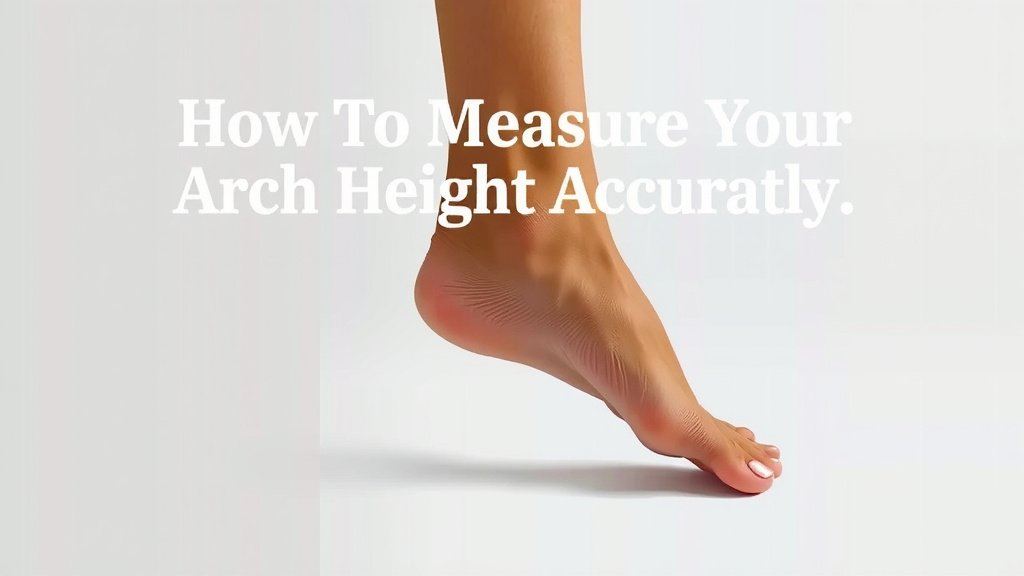
How to Measure Your Arch Height Accurately
Measuring your arch height is actually pretty simple. You can do it with just a few basic supplies you likely have at home, like paper and a pencil. Knowing your arch type can help you find shoes that fit better and prevent foot pain. Many people find understanding their arch helps them with everyday comfort and athletic performance.
Your arch plays a huge role in how your foot lands and supports your body. A high arch might need more cushioning, while a flat foot could benefit from more support. Getting this right means happier feet, whether you’re running a marathon or just running errands. We’ll show you the easiest ways to figure out your arch type.
TL;DR:
- Arch height matters for comfort and support.
- You can measure your arch at home easily.
- Different arch types need different shoe support.
- This helps prevent foot pain and improves performance.
Let’s walk through exactly how to measure your arch height step by step.
“`htmlFiguring Out Your Foot’s Arch Type
Understanding your arch height is a really **smart move** for foot health. It helps you pick the right shoes. It can also make your workouts feel **so much better**. Many people just guess their arch type. But a simple test can give you real answers. We’ll guide you through the easiest ways to find out what you’ve got.
Why does it matter? Your arch is your foot’s natural shock absorber. It helps distribute your body weight. It also helps you push off the ground when you walk or run. The shape of your arch impacts how your foot lands. It affects the forces traveling up your legs. Getting the right support can prevent common problems.
The Wet Footprint Test: Your Arch’s Best Friend
This is the most common and easiest way to measure your arch. You probably have everything you need right in your home. It’s a bit like a science experiment, but for your feet! Research and found this method is very reliable for general arch classification (NCBI).
What You’ll Need
- A large sheet of paper (poster board or thick paper works best).
- A bowl or container of water.
- A towel for drying your feet.
- A ruler or tape measure (optional, for more precise measurement).
- A pencil or pen.
Step-by-Step Guide to Your Wet Footprint
First, find a flat, hard surface. Lay your large sheet of paper down. You’ll want to stand on it later. Make sure the paper won’t slide around. A kitchen floor or a tiled hallway is often a good spot.
Next, wet the sole of your foot. You can do this by standing in shallow water or wetting your foot thoroughly. Make sure your whole foot is damp, but not dripping wet. You want a good imprint, not a puddle.
Now, carefully step onto the paper. Place your wet foot right in the middle. Try to keep your foot as still as possible for a few seconds. This helps ensure a clear print. Don’t shift your weight too much.
Finally, step off the paper. Take a look at the footprint you’ve left. You should see a clear outline of your foot. This print is your key to understanding your arch height.
Interpreting Your Footprint
Now for the fun part: what does your footprint tell you? Look at the imprint closely. You’ll see a pattern based on how much of your foot touches the paper.
Normal Arch
If you see about half of your arch area printed, you likely have a **normal arch**. This means there’s a visible curve, but a good portion of your midfoot connects to the ground. Your footprint will show a clear heel and forefoot, with a noticeable inward curve. This is a common arch type.
Flat Arch (Low Arch or Pes Planus)
Do you see almost your entire foot’s outline on the paper? If the print shows very little curve, or no curve at all, you probably have a **flat arch**. This means your arch collapses inward when you stand. Most of your sole will be in contact with the paper. This is also sometimes called a “low arch”.
High Arch (Pes Cavus)
Is there a very thin line connecting your heel and forefoot, or no line at all? This suggests a **high arch**. Your footprint will show a lot of empty space in the middle. This means your arch is much higher off the ground. You might see just your heel and the ball of your foot clearly printed.
What If You Want to Be More Precise?
If you want a more exact measurement, you can use a ruler. After you make your wet footprint, you can draw lines to measure the gap. Place your ruler across the widest part of your arch imprint. Measure the distance from the outer edge of your foot to the inner curve. If this gap is more than half the width of your foot, you likely have a high arch. If it’s less than half, it might be a normal or flat arch.
Another measurement you can take is the width of the arch itself. Measure the narrowest part of the arch imprint. Compare this to the widest part of your forefoot imprint. Many podiatrists use specific ratios, but for home use, the visual comparison is usually sufficient (Cleveland Clinic).
The Standing Arch Measurement Method
If the wet footprint test isn’t quite working for you, or you want another way to check, try this standing method. It focuses more on the height of the arch itself when you’re bearing weight.
How to Do It
First, stand with your feet flat on the floor. You want to be in a relaxed, natural stance. Don’t try to point your toes or put extra weight on one part of your foot.
Next, slide a piece of paper under your arch. Get it as far under as you can without lifting your heel or toes too much. You want to feel the shape of your arch against the paper.
Once the paper is in place, carefully try to lift your foot slightly. Keep your heel and the ball of your foot on the ground. You want to create a space where you can see the arch. This can be tricky, so take your time.
Assessing the Height
With the paper partially under your arch, you can visually assess its height. If you can easily slide your finger or the paper completely under the arch, you likely have a high arch. If you can only slide the paper partway under, or it feels very snug, you may have a normal arch. If you can’t slide the paper under at all because your arch touches the floor, you probably have a flat arch.
You can also use a pencil to mark the paper where your arch begins and ends. Then, remove the paper and measure the distance. A larger distance here suggests a higher arch. This method helps you quantify the space under your foot when standing.

What Do These Arch Types Mean for You?
Knowing your arch type is super helpful. It guides you in choosing the right footwear and support.
Normal Arches
If you have a normal arch, you’re in luck! Most shoes will feel comfortable. Your feet likely pronate (roll inward) a healthy amount. You don’t usually need special shoes, but look for shoes that offer a **good balance** of cushioning and support.
Flat Arches
People with flat arches often overpronate. This means their feet roll inward too much. This can put extra stress on your ankles and knees. You’ll want to look for shoes with **excellent stability and support**. Motion control shoes are often a good choice. You might also benefit from supportive insoles or orthotics. You might also benefit from supportive insoles or orthotics.
High Arches
High arches tend to supinate, or underpronate. This means your feet don’t roll inward enough. Your foot strikes the ground more on the outside edge. This can lead to less shock absorption. You’ll likely need shoes with **plenty of cushioning** to help absorb impact. Flexible shoes that allow for natural foot movement are also good. Avoid shoes that are too stiff, as they can feel uncomfortable.
Quick Arch Measurement Checklist
- Gather your supplies: paper, water, towel.
- Wet the sole of one foot.
- Step onto the paper and make a clear imprint.
- Examine the imprint for the amount of arch visible.
- Compare your imprint to the descriptions of normal, flat, and high arches.
- Consider how this knowledge can help you choose better shoes!
Conclusion
You’ve now learned how simple it is to measure your arch height right at home. Understanding if you have a normal, flat, or high arch is a big step toward better foot health. This knowledge helps you make smarter choices about your footwear. It can lead to more comfort in your daily activities and better support during exercise. Don’t let foot pain hold you back. Take that footprint or perform the standing test today. Your feet will thank you for it!
Frequently Asked Questions
Can I measure my arch height without getting my feet wet?
Yes, you can! The standing arch measurement method allows you to assess your arch without water. You slide a piece of paper under your arch while standing and see how much space there is. This gives you a good visual idea of your arch height.
How often should I re-measure my arch height?
For most people, arch height doesn’t change dramatically over time. Measuring it once is usually enough to understand your foot type. You might want to re-measure if you notice significant changes in your feet or experience new foot pain.
Does arch height affect athletic performance?
Absolutely. Your arch plays a key role in shock absorption and stability during movement. Choosing shoes that match your arch type can improve your comfort and efficiency, which can positively impact your athletic performance.
What if my arch seems to be between two types?
It’s common for arches to fall somewhere between categories. If your footprint or standing test shows characteristics of both normal and high arches, for example, you might benefit from shoes that offer a good balance of cushioning and support. Look for shoes designed for neutral pronation.
Can my arch height change as I get older?
Yes, it’s possible. Factors like weight gain, aging, and certain medical conditions can sometimes lead to changes in foot structure, including arch height. If you suspect your arch has changed, it’s a good idea to re-evaluate it.