
How to Choose the Best Running Shoes for Women
Choosing the right running shoes for women involves considering your foot type and running style to prevent injuries and enhance performance. Look for shoes that offer the correct amount of cushioning and support for your unique needs. Your perfect pair will feel comfortable from the first step.
Many women find that the right shoe makes a world of difference. We know that running shoe technology can seem overwhelming, but focusing on a few key factors simplifies the process. Understanding your pronation (how your foot rolls inward) is a big step toward finding a shoe that works with your body, not against it.
- Consider your foot’s arch height.
- Match shoe support to your pronation type.
- Prioritize comfort and proper fit above all else.
- Don’t be afraid to try on multiple brands and models.
Ready to find your perfect running partners? Let’s walk through exactly how to choose running shoes tailored for you.
Finding Your Ideal Running Shoes: A Woman’s Guide
Choosing the right running shoes is like picking the perfect dance partner. You want them to move with you, support you, and make every step feel better. We know the shoe aisle can look intimidating, filled with technical terms and endless options. But don’t worry, we’re here to help you navigate it.
Understanding Your Feet: The Foundation of Choice
Before you even look at a shoe, let’s get to know your feet. Your foot type plays a huge role in what kind of support and cushioning you’ll need. Think of it as understanding your own body’s blueprint.
Arch Height Matters
Your arch is the middle part of your foot, and its height can tell us a lot. Most people fall into one of three categories: normal, flat, or high arches.
What’s Your Arch Type?
A simple way to check is the “wet test.” Wet the bottom of your foot and step onto a piece of paper or cardboard.
- Flat Arches: If your footprint shows almost your entire foot, you likely have flat arches. This means your foot rolls inward quite a bit when you run.
- Normal Arches: A footprint showing about half of your arch indicates a normal arch. This is common and usually means your foot lands and rolls in a balanced way.
- High Arches: If you see only your heel and the ball of your foot, with a very thin line connecting them, you probably have high arches. Your foot might not roll inward enough.
Pronation: How Your Foot Rolls
Pronation is your foot’s natural way of absorbing shock as you walk or run. It’s how your foot rolls inward after it strikes the ground.
Different Types of Pronation
Understanding your pronation helps you pick shoes that offer the right kind of stability or flexibility.
- Overpronation: This is common with flat feet. Your foot rolls inward excessively, which can sometimes lead to strain. Shoes designed for overpronation offer more stability.
- Neutral Pronation: Your foot rolls inward a normal amount. You generally do well with a wide variety of shoes, often called neutral shoes.
- Supination (Underpronation): This happens with high arches. Your foot doesn’t roll inward enough, or even rolls outward. You’ll likely need shoes with plenty of cushioning and flexibility. Many experts suggest extra cushioning for this type (Cleveland Clinic).
Key Shoe Features to Consider
Now that you know your feet, let’s talk about what makes a running shoe right for you. It’s a mix of comfort, support, and how you plan to use them.
Cushioning: Soft Steps or Firm Support?
Cushioning is all about shock absorption and comfort. It’s the padding that helps soften the impact of each stride.
Finding the Right Amount
The amount of cushioning you need often depends on your body weight, running surface, and personal preference.
- Minimalist: Very little cushioning, offering a natural feel.
- Moderate: A good balance for most runners.
- Maximum: Lots of plush cushioning, great for shock absorption on hard surfaces or for longer runs.
Research often shows that adequate cushioning can help reduce fatigue and impact forces (NCBI). If you run on pavement often or are heavier, you might appreciate more cushioning.
Support: Guiding Your Foot
Support features in running shoes are designed to guide your foot’s motion, especially if you overpronate.
Types of Support
The support level you need links directly to your pronation type.
- Neutral Shoes: These offer cushioning and flexibility without extra stability features. They are ideal for people with neutral pronation or supination.
- Stability Shoes: They have features like medial posts or guide rails to help control overpronation. These are good for those who roll inward a bit too much.
- Motion Control Shoes: These are the most rigid and offer maximum support for severe overpronation.
Many podiatrists recommend choosing shoes that match your pronation to help prevent common running injuries (American Podiatric Medical Association).
Fit and Comfort: The Non-Negotiables
This is perhaps the most important factor. If a shoe doesn’t feel comfortable right away, it’s probably not the right shoe for you, no matter what features it boasts.
Getting the Perfect Fit
When you try on shoes, make sure:
- There’s about a thumb’s width of space between your longest toe and the end of the shoe.
- The shoe feels snug around your heel and midfoot, with no slipping.
- You can wiggle your toes freely.
- You try them on later in the day, as feet tend to swell.
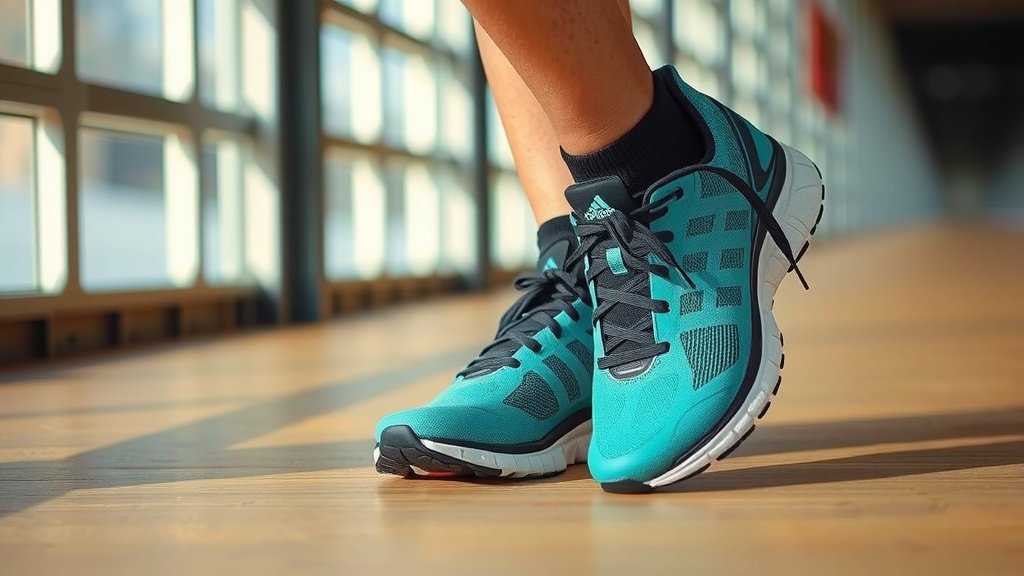
Don’t be swayed by just how a shoe looks. A shoe that fits perfectly will feel good from the first mile to the last. Comfort is your best indicator of a good match.
Consider Your Running Habits
Where and how often you run can also influence your shoe choice. Think about the terrain and the distance.
Trail vs. Road Running
Running shoes are typically designed for specific surfaces.
- Road Shoes: These are lighter and more flexible, with cushioning designed for hard, even surfaces like asphalt or treadmills.
- Trail Shoes: They have more rugged outsoles for better grip on dirt, mud, and rocks. They often offer more protection and durability.
Distance and Frequency
If you’re a casual runner doing a few miles a week, standard cushioning might be fine. However, if you’re training for a marathon, you’ll want shoes with superior cushioning and durability to handle the higher mileage. Long-distance runners often find that investing in a well-cushioned shoe can save their joints over time.
Your Running Shoe Checklist
Here’s a quick rundown to help you remember the key points when you shop:
- Know Your Arch Type: Use the wet test to check.
- Understand Your Pronation: Overpronate, neutral, or supinate?
- Prioritize Comfort: It should feel great from the start.
- Check the Fit: Enough toe room, snug heel, no pinching.
- Consider Your Running: Road, trail, distance?
- Don’t Be Afraid to Ask: Talk to store employees!
Conclusion
You’ve learned how to choose running shoes that are right for your body and your run. Understanding your arch height and pronation is key. Don’t forget the importance of cushioning, support, and most importantly, a comfortable fit. Your running experience will improve when your shoes work with you. Your next step is to head to a specialty running store. Try on a few pairs, listen to your feet, and trust your comfort. Happy running!
Frequently Asked Questions
How often should I replace my running shoes?
Most experts recommend replacing running shoes every 300 to 500 miles. You might need to replace them sooner if you notice significant wear on the tread or a loss of cushioning. Paying attention to how your feet feel during runs is also a good indicator.
Can I wear any athletic shoe for running?
While any sneaker might feel okay for a short walk, dedicated running shoes are designed differently. They offer specific cushioning and support to handle the repetitive impact of running. Using shoes not designed for running can increase your risk of injury.
What if my feet swell during a run?
It’s common for feet to swell, especially on longer runs or in warmer weather. This is why it’s important to have about a thumb’s width of space at the front of your shoe when you try them on. Ensure the midfoot and heel feel snug but not constricting.
Do I need different shoes for road and trail running?
Yes, it’s generally best to have separate shoes. Road running shoes are built for smooth, hard surfaces and focus on cushioning and flexibility. Trail running shoes have more aggressive treads for grip and often offer added protection against rocks and roots.
Is it okay to buy running shoes online?
Buying online can be convenient, but it’s best to know your exact size and the model you prefer. Ideally, try on shoes in person first at a specialty store. This allows you to feel the fit and support. If you do buy online, ensure there’s a good return policy.