Test Running Shoes on Treadmill: Your Guide
Yes, you can absolutely test running shoes on a treadmill, and it’s a smart way to get a feel for them before hitting the road. This method helps you understand how the shoe Our guide explains if you need special shoes for treadmill running.cushions your stride and if it feels comfortable during a short run. Many runners find this a convenient way to test new footwear indoors.
Trying shoes on a treadmill lets you focus on the initial fit and feel without external distractions like uneven pavement or weather. It’s a controlled environment where you can quickly gauge basic comfort and support. Think of it as a mini-test drive for your feet.
- Treadmills offer a controlled test environment.
- You can gauge cushioning and initial comfort quickly.
- It’s a good way to compare shoes indoors.
- Focus on how the shoe feels during your natural stride.
Let’s walk through exactly how to best test those running shoes on your treadmill, step by step, so you can make a confident choice.
Putting Your Running Shoes to the Test on a Treadmill
So, you’ve got your eye on a new pair of running shoes and a treadmill is your testing ground? That’s a smart move! A treadmill provides a consistent surface, allowing you to focus purely on how the shoes feel. You can get a good sense of their cushioning, support, and overall fit without the variables of the outdoor world. Let’s make sure you get the most out of this indoor test drive for your feet. Our guide helps you choose the right daily running shoe.
Preparing for Your Treadmill Shoe Test
Before you even step on the treadmill, a little preparation goes a long way. You want to simulate your actual running conditions as closely as possible, even indoors. This means wearing the kind of socks you typically run in. Thin, moisture-wicking socks are different from thick, cushioned ones, and this difference can impact how a shoe fits. You might even consider bringing your own running socks to the store if you’re trying shoes there.
What to Wear and Bring
Always wear your usual running socks. If you have orthotics or specific insoles you use, bring those too! You’ll want to place them in the shoes you’re testing to see how they work together. Think about comfort from your toes to your ankles. Any pinching or rubbing from socks can feel amplified when you’re moving.
Setting Up the Treadmill
You’ll want to set the treadmill to a pace that’s comfortable for you, not a full sprint. Think of your typical easy running pace. A speed of around 5 to 6 miles per hour is often a good starting point for many. This allows you to feel the shoe’s natural movement through your stride. You don’t need to push yourself; the goal is evaluation, not a workout.
The Treadmill Test: Step-by-Step Guidance
Once you’re ready, it’s time to hit the belt. Remember, you’re looking for comfort and how the shoe interacts with your foot’s natural motion. Don’t just stand there; you need to move! A few minutes of walking and then a short jog is usually enough to get a good initial feel.
Initial Walk-Through
Start with a brisk walk. Feel how the shoe rolls from heel to toe. Does it feel stiff or flexible where you need it to be? Are there any immediate pressure points? Pay attention to the toe box – is there enough room for your toes to splay naturally? Many experts recommend that you should have about a thumb’s width of space between your longest toe and the end of the shoe (CDC).
The Short Jog: What to Look For
After walking, transition to a gentle jog. This is where you’ll really start to feel the cushioning and responsiveness.
- Cushioning: Does the shoe absorb impact well? Does it feel too soft or too firm?
- Support: Do your feet feel stable? Or do you feel your ankles rolling inward or outward excessively?
- Fit: How does the midfoot feel? Is the heel slipping at all?
- Overall Comfort: Are there any hot spots or areas of irritation starting to develop?
Focus on Your Stride
Try to run naturally, as you normally would. Don’t overthink your form. The shoe should work with your stride, not against it. Does it feel like it’s helping you roll forward, or does it feel clunky and heavy? You’re assessing how the shoe performs during the natural gait cycle.
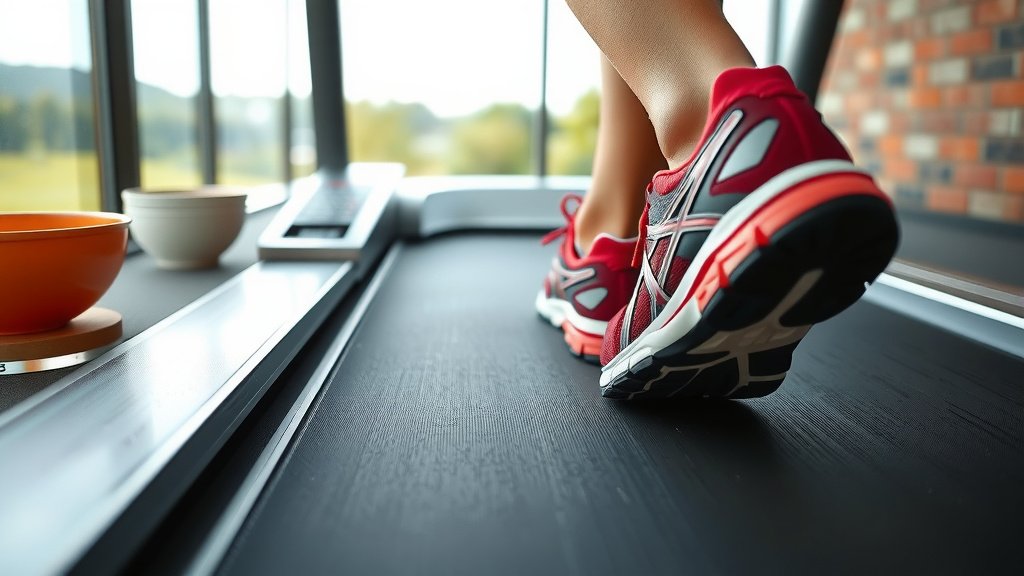
Assessing Key Shoe Features During the Test
While you’re jogging, keep a mental checklist of what your feet are telling you. Different shoes offer different benefits, and your treadmill test can highlight these.
Cushioning and Responsiveness
This is often the first thing runners notice. Does the shoe feel plush and soft, or firm and responsive? There’s no right or wrong answer here, as it depends on your preference and running style. Some research suggests that adequate cushioning can help reduce stress on your joints (NIH). If you feel jarring impacts, the cushioning might be insufficient for you. Conversely, if the shoe feels like a marshmallow and offers no push-off, it might be too soft.
Fit and Feel: The Little Things Matter
Beyond cushioning, the overall fit is paramount. Does the shoe feel snug but not tight? Check for:
| Area | What to Feel For |
|---|---|
| Heel | No slipping or excessive rubbing. |
| Midfoot | Secure but not constricting. The laces should feel comfortable. |
| Toe Box | Room to wiggle your toes; no pressure on the sides. |
| Arch | Comfortable support that matches your foot type. |
A shoe that feels off in any of these areas, even slightly, can lead to discomfort or injury over longer distances (Mayo Clinic). It’s like wearing a coat that’s just a little too tight in the shoulders – it bothers you the whole time.
Support and Stability
Consider how your foot lands and pushes off. Do you feel stable through your foot and ankle? If you pronate (your foot rolls inward too much), you might need a shoe with more stability. If your foot stays relatively neutral, a neutral shoe might be perfect. A treadmill can help you feel this subtle difference without the added challenge of an uneven surface.
Post-Treadmill Evaluation Checklist
After your short run, step off the treadmill and give your feet a moment. What do you notice? Take a deep breath and assess.
- Did any part of your foot feel pinched or cramped?
- Was there any rubbing or hot spots forming?
- Did your heel feel secure, or did it lift with each step?
- Did the cushioning feel appropriate for your preferences?
- Did your feet feel supported and stable?
- Would you feel comfortable running in these for 30 minutes or more?
Conclusion
Testing your running shoes on a treadmill is a smart way to get a feel for them before you commit. You’ve learned how to prepare, what pace to use, and what to focus on during your short jog. Paying attention to cushioning, fit, and support will help you avoid discomfort down the road. Now you can confidently use this method to find your next perfect pair of running shoes.
Your next step is to apply these techniques the next time you’re shopping for new shoes. Your feet will thank you!
Frequently Asked Questions
How long should I test shoes on the treadmill?
A short jog of 3 to 5 minutes is usually enough for an initial assessment. This allows you to feel the shoe’s cushioning, support, and fit without overdoing it. The goal is to gauge basic comfort and identify any immediate issues.
Can I use my own insoles or orthotics during the test?
Absolutely! It’s highly recommended to bring your personal insoles or orthotics with you. Place them in the shoes you’re testing to see how they interact with the shoe and if they provide the support you need.
What if I don’t have a treadmill? Can I still test shoes?
If you don’t have access to a treadmill, you can still test shoes in a store by walking around and doing a short jog on the store’s treadmill. Many running stores encourage this. Outside, focus on walking on various surfaces and doing quick bursts of jogging if possible.
Should I test different speeds on the treadmill?
For testing new shoes, it’s best to stick to a comfortable, easy running pace. Testing drastically different speeds might mask how the shoe feels during your normal stride. Focus on how it performs at your typical effort level.
What’s the difference between testing on a treadmill versus outside?
Treadmills offer a controlled, consistent surface that isolates the shoe’s feel. Outdoor running involves varying terrain, inclines, and weather, which can add complexity. A treadmill test helps you focus purely on the shoe’s cushioning, fit, and immediate comfort before encountering outdoor elements.