Rain Running Shoes: Your Buyer’s Guide
To choose running shoes for rain, you need to look for water-resistant uppers and grippy outsoles. This combination will help keep your feet drier and prevent slips on wet surfaces. Don’t worry, running in the rain doesn’t have to mean soggy socks and near-misses!
Running in wet weather presents unique challenges for your feet. The right shoes can make a world of difference, offering better traction and some much-needed water protection. We’ve researched what matters most for rainy day runs.
- Look for water-resistant materials.
- Prioritize outsoles with good grip.
- Consider breathability to avoid sweat buildup.
- Ensure a snug, secure fit.
- Don’t forget reflective elements for visibility.
Let’s walk through exactly how to pick the best pair to keep you pounding the pavement, rain or shine.
Finding Your Perfect Rainy Day Running Shoes
Running in the rain doesn’t have to be a soggy, slippery mess. Choosing the right footwear is key to staying comfortable and safe. We’ve researched what makes a running shoe great for wet conditions. It’s all about the materials and the design. You want shoes that offer protection without making your feet feel like they’re trapped in plastic bags. Let’s get you set up for happy, dry (or at least drier!) miles.
Understanding the Challenges of Wet Weather Running
Rain brings a few specific problems for runners. Water can make roads and trails slick, increasing your risk of falls. Soggy shoes can lead to blisters and discomfort. Your feet can also get cold faster when they’re wet. These are all things we want to avoid.
Traction: Your First Line of Defense
When surfaces get wet, they lose their grip. This is where your shoe’s outsole becomes super important. You need a sole that can bite into the wet ground. Think about how car tires have deep treads for rain. Your running shoes need something similar.
Water Resistance vs. Waterproofing
It’s easy to think you need fully waterproof shoes. But many runners find that completely waterproof shoes don’t breathe well. This can lead to sweaty feet, which is also uncomfortable. Instead, we often look for shoes with water-resistant uppers. This means the material helps **repel water** without sealing your foot in.
Breathability: Keeping Your Feet Happy
Even in the rain, your feet sweat. If a shoe doesn’t let any air in, that sweat gets trapped. This can make your feet feel clammy and increase the chance of blisters. We found that a balance is best: enough water resistance to keep rain out, but enough breathability to let moisture escape.
Key Features to Look For in Rainy Day Running Shoes
Now, let’s dive into the specifics. What should you be looking for when you’re shopping? We’ve broken down the most important features.
Outsole Grip: The Foundation of Stability
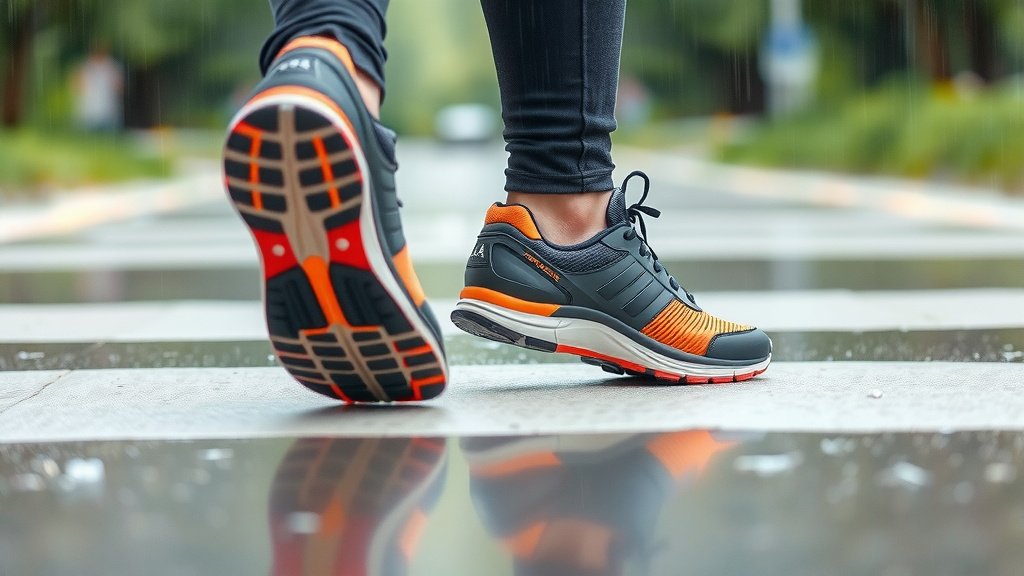
The outsole is the part of the shoe that touches the ground. For rainy runs, you want an outsole with a **deep, multi-directional lug pattern**. These lugs act like tiny claws, digging into wet surfaces to give you better traction. Some brands even use special rubber compounds designed for wet grip. We found that a wider surface area on the outsole can also help.
Material Matters
Look for outsoles made of sticky rubber. These tend to perform better on wet pavement and trails than harder plastics. We also noted that the spacing of the lugs is important. Wider spacing helps shed mud and water more effectively, preventing the shoe from feeling heavy and slick.
Upper Materials: Staying Dry
The upper is the part of the shoe that covers your foot. For rain, you want materials that are **water-resistant**. Many running shoes use synthetic mesh. While great for breathability, regular mesh can soak up water quickly. Look for shoes with:
- Tightly woven mesh: This offers some water resistance.
- Treated synthetic fabrics: Some shoes have uppers treated with a DWR (durable water repellent) finish. This causes water to bead up and roll off.
- Minimal seams: Fewer seams mean fewer places for water to sneak in.
What to Avoid in Uppers
You generally want to avoid shoes with large, open mesh panels. These are great for hot weather but will let water right through. Also, very thick, non-breathable materials like heavy leather aren’t ideal, as they can trap moisture and become heavy. We found that shoes with a slightly more **durable knit** can offer a good balance.
Fit and Comfort: Always Number One
Even with the best rain features, a poorly fitting shoe is no good. Your shoes should feel **snug and secure**, especially around the heel and midfoot. This prevents your foot from sliding around inside the shoe, which is even more critical when it’s wet. You don’t want extra space for water to slosh around.
The Importance of Lacing
Proper lacing can make a big difference. A secure lacing system helps lock your foot into the shoe. If your shoes feel a bit loose, consider a **heel-lock lacing technique**. This involves using the extra eyelets near your ankle to create a more secure fit. We found that this simple adjustment can prevent heel slippage and improve overall stability.
Drainage: Letting Water Escape
Sometimes, despite your best efforts, water will get into your shoes. It might be from a deep puddle or just heavy rain. In these cases, good drainage is essential. Shoes with **perforations or small holes** in the sole or midsole can help water escape more quickly. This means your shoes won’t stay waterlogged for as long.
A Quick Checklist for Your Rainy Day Shoe Search
Ready to find your perfect pair? Keep this checklist handy:
- Outsole: Look for deep, aggressive tread patterns and sticky rubber.
- Upper: Prioritize water-resistant materials like treated synthetics or tightly woven mesh.
- Fit: Ensure a secure, snug fit with no excessive heel slippage.
- Breathability: Aim for a shoe that balances water resistance with some airflow.
- Drainage: Consider shoes with features that help water escape.
Considering Reflective Elements for Visibility
Rain often means darker conditions, even during the day. Being seen by drivers and others is vital for your safety. Many running shoes designed for tougher conditions include **reflective details**. These can be on the heel, the sides, or the laces. They catch headlights and streetlights, making you much more visible. We found that any extra visibility is a huge plus on gloomy days.
When to Consider Gaiters or Waterproof Socks
While the right shoes help a lot, sometimes you need a little extra protection. If you run in very heavy rain or through deep puddles frequently, you might consider gaiters. These are fabric cuffs that fit over your shoes and lower legs to keep debris and water out. Waterproof running socks are another option. They work by using a breathable waterproof membrane. We found that for most moderate rain, good shoes are enough, but these can be great additions for extreme conditions.
Conclusion
You’re now equipped to choose running shoes that can handle wet weather. Remember, the key is finding a balance. You want water-resistant uppers to keep the worst of the rain out. Equally important is an aggressive outsole for reliable traction on slick surfaces. Don’t forget a secure fit and good drainage for comfort. With the right shoes, you can confidently tackle your runs, no matter what the sky is doing. Your next step is to visit your local running store or browse online with these features in mind.
Frequently Asked Questions
Are waterproof running shoes always the best for rain?
Not necessarily. While waterproof shoes offer the most protection, they can also be less breathable. This can lead to sweaty feet, increasing blister risk. Many runners find that water-resistant shoes provide a better balance of protection and comfort for most rainy conditions.
How important is the tread pattern on the outsole for rainy runs?
The outsole tread is extremely important for rainy runs. You need a pattern with deep, multi-directional lugs. These help your shoes grip wet surfaces like pavement and trails, preventing slips. A well-designed tread acts like your first line of defense against slick conditions.
What if my running shoes get soaked despite being water-resistant?
If your shoes get wet, look for features that aid drainage. Shoes with small holes or perforations in the sole or midsole allow water to escape more quickly. This helps prevent your shoes from staying waterlogged and heavy for too long.
Should I size up my running shoes for rainy weather?
Generally, you shouldn’t need to size up significantly. A snug and secure fit is still paramount to prevent your foot from sliding inside the shoe. If you find your current shoes feel a bit loose, consider using a heel-lock lacing technique for a more secure feel.
How can I improve visibility when running in the rain?
Rain often brings darker conditions, so visibility is key for safety. Look for running shoes with reflective elements on the heel, sides, or laces. These details catch light from headlights and streetlights, making you much more noticeable to drivers and others.