US vs UK Running Shoe Sizing: Find Your Perfect Fit
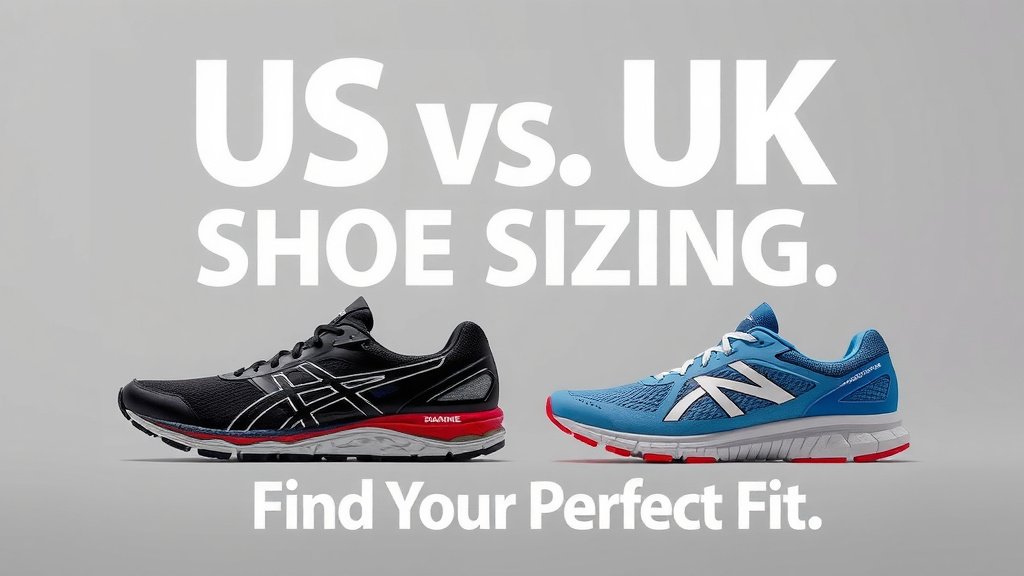
The main difference between US and UK running shoe sizing is that UK sizes tend to be a half-size smaller than their US counterparts. So, if you wear a US size 9, you’ll likely need a UK size 8.5. Always **check the specific brand’s size chart** to be sure, as there can be slight variations. It’s a common pitfall for runners buying shoes online, so knowing this difference can **save you time and frustration**.
This sizing discrepancy isn’t just a quirk; it’s a long-standing convention. Many brands manufacture shoes for both markets, leading to these distinct sizing systems. Understanding this can help you navigate international online stores or purchase shoes from brands based in different regions. It’s a simple adjustment that makes a **big difference in finding the perfect fit**.
- UK running shoe sizes are typically 0.5 smaller than US sizes.
- A US 9 is usually a UK 8.5.
- Always refer to the shoe brand’s specific size guide.
- Sizing can vary slightly between different brands.
Let’s dive into how to make sure you get the right fit, no matter where you’re buying your running shoes from.
“`htmlNavigating Running Shoe Sizes Across the Pond
So, you’re looking to buy some new running shoes, and you’ve stumbled upon a fantastic deal from a UK-based retailer. Great find! But wait, what’s this? The sizes look different. You’re usually a US 9, but over there, it says 8.5. Don’t panic! This is a super common point of confusion for many runners. We’re here to break down the differences between US and UK running shoe sizing.
The primary reason for this difference is historical. UK sizing systems have a different starting point and increment scale compared to US sizing. Think of it like miles versus kilometers. They both measure distance, but the numbers and the way they’re expressed are different. It’s not that one is “better” than the other; they’re just established conventions that have been around for a long time. We’ll help you figure out your perfect fit, no matter which side of the Atlantic you’re shopping from.
Understanding the Core Difference
The most important thing to remember is that UK running shoe sizes are typically a half-size smaller than their US equivalents. This means if you wear a US size 9, you’ll most likely need a UK size 8.5. This applies to both men’s and women’s sizing, though there can be slight variations between brands.
Why the half-size difference? It’s deeply rooted in how shoe manufacturing and sizing standards developed in each country. The UK system, for instance, often starts with a smaller “last” (the mold a shoe is built around) and has slightly different increments between sizes. Many experts agree this historical divergence is the root cause (National Institute of Standards and Technology).
Decoding the Numbers: A Simple Conversion Guide
Let’s make this super simple. Imagine your US size as your baseline. To find your approximate UK size, you just need to subtract 0.5.
Here’s a quick reference table to help you visualize this:
| US Size | Approximate UK Size |
|---|---|
| US Men’s 8 | UK Men’s 7.5 |
| US Men’s 9 | UK Men’s 8.5 |
| US Men’s 10 | UK Men’s 9.5 |
| US Women’s 7 | UK Women’s 6.5 |
| US Women’s 8 | UK Women’s 7.5 |
| US Women’s 9 | UK Women’s 8.5 |
Remember, this is a general rule. Shoe fit is very personal. Factors like the shape of your foot and the shoe’s specific design can influence the perfect size. We’ll talk more about how to ensure a great fit in a bit.
Why Brand Size Charts Are Your Best Friend
While the half-size rule is a great starting point, relying solely on it can sometimes lead you astray. Different running shoe brands have their own unique sizing charts. One brand’s US 9 might fit slightly differently than another brand’s US 9. The same applies to their UK sizing.
This is why we **always recommend checking the specific brand’s size chart** on their website or the retailer’s product page. These charts usually provide measurements in both inches and centimeters, which are universal. Comparing these measurements to your foot length is the most accurate way to find your size.
Where to Find the Size Chart
Most reputable online retailers will have a dedicated size guide linked directly on the product page for the running shoes you’re interested in. Look for buttons or links that say “Size Chart,” “Size Guide,” or “Find Your Fit.” If you’re buying directly from a brand’s website, the size chart is usually found in a “Help” or “Customer Service” section, or directly on the product listing.
What to Look For on the Chart
When you find the size chart, you’ll likely see columns for US, UK, EU (European sizing), and sometimes even centimeters (CM) or millimeters (MM). The CM/MM measurements are often the most helpful. You can measure your foot length in centimeters and then find the corresponding size on the chart. This bypasses the US vs. UK confusion altogether!
The Importance of Fit Beyond Just the Number
Even if you nail the size conversion, a perfect fit involves more than just the number. Running shoes need to accommodate the natural swelling of your feet during a run and provide enough room for your toes to splay. A shoe that’s too tight can cause blisters and discomfort. Too loose, and you risk slipping and potential injury.
Consider Your Foot Shape
Do you have wide feet? Narrow feet? Some brands offer shoes in different widths (like B, D, 2E for men, and A, B, D for women). A standard conversion might get you the right length, but you might need to adjust for width. Always check if width options are available for the model you’re eyeing.
The “Thumb Rule” for Toe Space
A time-tested trick is the “thumb rule.” When trying on shoes, there should be about a thumb’s width of space between the end of your longest toe and the front of the shoe. This allows for foot expansion during your run. We’ve found this simple test catches a lot of potential sizing issues.
Common Pitfalls and How to Avoid Them
Buying running shoes online, especially internationally, can be a minefield if you’re not careful. Here are a few common mistakes we see runners make and how you can sidestep them:
- Assuming all brands are the same: As we’ve discussed, sizing varies. Don’t assume your size in one brand translates directly to another.
- Ignoring width: If your feet are wider or narrower than average, focus on finding brands that offer different width options.
- Not measuring your feet: Especially if you’re buying from a new brand, grab a tape measure and compare it to the CM/MM on the size chart. It’s the most reliable method.
- Buying based on looks alone: While we all love a stylish shoe, function and fit should come first for running.
- Forgetting about socks: Always try on shoes with the type of socks you’ll actually run in. Thicker socks can make a shoe feel tighter.
Your Checklist for International Shoe Shopping Success
Ready to confidently buy your next pair of running shoes, whether they’re from a US or UK retailer? Follow this quick checklist:
- Confirm your foot length in CM/MM.
- Locate the specific brand’s size chart.
- Compare your foot length to the chart’s CM/MM measurements.
- Check for available width options if needed.
- When in doubt, size up slightly.
- Read customer reviews for fit feedback.
By understanding the basic US vs. UK sizing difference and taking a few extra steps, you can ensure you get the perfect fit every time. Happy running!
“`Conclusion
Navigating US versus UK running shoe sizes doesn’t have to be a run-stopper. Remember, the core difference is typically a half-size: UK sizes run smaller than US sizes. However, this is just a starting point. Your perfect fit hinges on using brand-specific size charts, ideally by measuring your foot in centimeters. Don’t forget to consider shoe width and wear the socks you run in when trying shoes on. Taking these extra steps ensures you’re not left with a pair that hinders, but one that helps you hit your stride comfortably and safely.
Your next step? Before you click ‘buy’ on that international deal, measure your foot length in CM and pull up the brand’s official size guide. Happy miles!
Frequently Asked Questions
Are US and UK shoe sizes different for both men and women?
Yes, the US versus UK sizing difference generally applies to both men’s and women’s running shoes. Typically, you’ll find that a UK size is about a half-size smaller than its US equivalent, regardless of gender. Always double-check the specific brand’s chart for men’s and women’s sizing accuracy.
What is the most reliable way to convert my US size to a UK size?
The most reliable way isn’t just a simple conversion; it’s using the shoe brand’s official size chart. Look for the centimeter (CM) or millimeter (MM) measurements on the chart. Measuring your foot’s length in CM and comparing it to the chart will give you the most accurate fit, bypassing US/UK confusion.
Can I just subtract 0.5 from my US size to get my UK size?
Subtracting 0.5 from your US size is a good general rule of thumb and often gets you close. However, this isn’t a foolproof method for every brand or every foot. Shoe manufacturers can have slight variations, so consulting the brand’s specific size guide is always recommended for the best results.
Do European (EU) shoe sizes factor into the US vs. UK sizing difference?
Yes, European sizing is another system entirely and usually has different numbers than both US and UK sizing. When checking a brand’s size chart, you’ll often see US, UK, and EU sizes listed side-by-side, along with CM measurements. This provides multiple ways to find your match.
What if I have wide or narrow feet? Does the UK vs. US size conversion account for width?
The basic US vs. UK sizing conversion typically refers to standard width. If you have wide or narrow feet, the conversion might get you the right length, but the shoe might still feel too tight or too loose. You’ll need to look for width designations (like ‘D’ or ‘2E’) on the shoe and size chart separately.