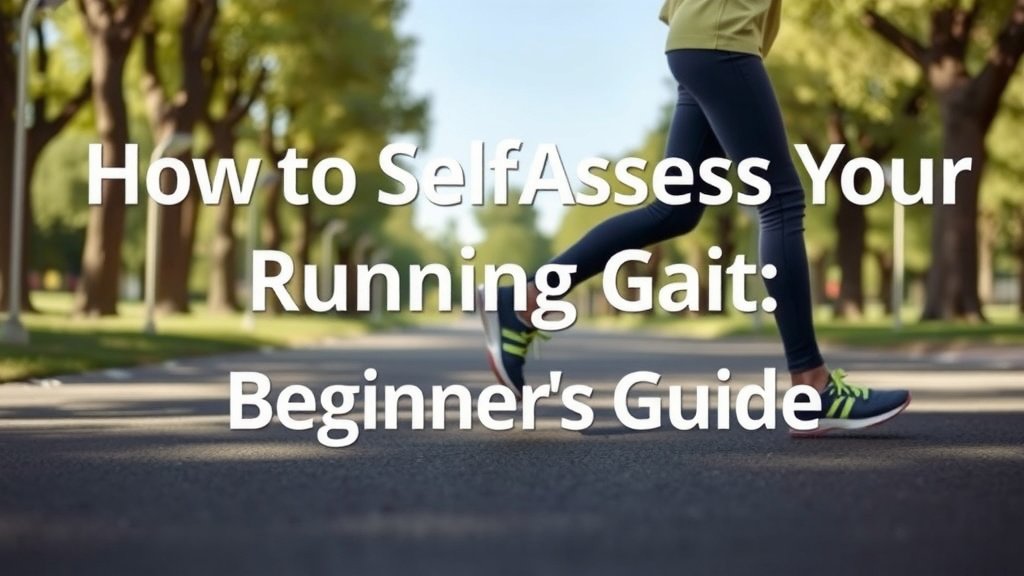
How to Self Assess Your Running Gait: A Beginner’s Guide
You can absolutely self-assess your running gait with a few simple steps right at home. By paying attention to your foot strike, posture, and arm swing, you can start to understand how your body moves when you run. This can help you prevent injuries and improve your efficiency.
Understanding your running gait is more than just a quick check. It’s about tuning into your body’s natural mechanics and spotting potential areas for improvement. Many runners find that small adjustments can lead to big differences in comfort and performance. We’ve found that focusing on these key areas can make a real impact.
- Check your foot strike.
- Notice your posture.
- Observe your arm swing.
- Look for signs of imbalance.
- Listen to your body.
Ready to become your own running guru? Let’s walk through exactly how to check your running gait step by step.
Checking Your Running Form at Home
You can absolutely learn a lot about your running gait without a fancy lab. We’ve found that observing a few key areas can give you a clear picture. This self-assessment helps you spot potential issues before they become bigger problems.
Understanding Your Foot Strike
Your foot strike is how your foot lands on the ground. It’s one of the most talked-about aspects of running form. There are three main types: heel strike, midfoot strike, and forefoot strike.
Heel Striking
This is when your heel hits the ground first. Many runners do this naturally. It’s not inherently bad, but it can sometimes lead to overstriding. Overstriding means your foot lands too far in front of your body. This can create a braking effect and add impact to your joints.
Midfoot Striking
With a midfoot strike, the middle of your foot lands more evenly. Your heel and the ball of your foot make contact around the same time. This strike can distribute impact more efficiently. Many runners find this offers a good balance of cushioning and propulsion.
Forefoot Striking
This is when the ball of your foot strikes the ground first. Your heel lifts off the ground quickly after. Some runners believe this is the most efficient. However, it can put more stress on your calf muscles and Achilles tendon. Research suggests that the body often adapts to a forefoot strike over time, but it’s important to transition gradually if you’re changing your form.
How to Observe Your Foot Strike
The easiest way to see your foot strike is to have someone record you. Ask a friend to film you running from the side. Use your phone or a camera. You can also try a treadmill if you have one. Watching the footage later will show you exactly what your foot is doing on impact. Pay attention to where your foot first makes contact with the ground.
Assessing Your Posture While Running
Good posture is key for efficient running. It helps you breathe better and use your energy wisely. Poor posture can lead to unnecessary strain on your back, shoulders, and hips.
The Ideal Running Stance
Think of your body as a straight, slightly leaning line. Your head should be up, looking forward, not down at your feet. Your shoulders should be relaxed and down, not hunched up towards your ears. Your torso should be tall and upright, with a slight forward lean from the ankles, not the waist. Your hips should be under your shoulders. This alignment allows gravity to help you move forward. Understanding running shoe drop can also influence your gait.
Common Postural Issues
One common issue is leaning too far back from the waist. This can put a lot of pressure on your lower back. Another is hunching your shoulders. This restricts your breathing and can lead to tension. We found that runners often slouch their upper body without realizing it.
How to Check Your Posture
Again, video is your best friend here. Record yourself running from the side. Look for that straight line from your head to your ankles. Are your shoulders relaxed? Is your upper body leaning slightly forward from the ankles? Try to feel your body in these positions. Imagine a string pulling you up from the crown of your head.
Observing Your Arm Swing
Your arm swing isn’t just for balance; it helps propel you forward. A good arm swing can make your stride more efficient and reduce fatigue. It should work in harmony with your legs.
What a Good Arm Swing Looks Like
Your arms should swing forward and back from your shoulders, not your elbows. Keep your elbows bent at about a 90-degree angle. Your hands should be relaxed, not clenched fists. Imagine you’re gently swinging your arms forward to a point just past your body’s midline. Avoid crossing your arms in front of your chest. That can twist your torso and waste energy.
Signs of an Inefficient Arm Swing
Are your arms swinging wildly side to side? Do you notice your shoulders creeping up towards your ears? Are your hands clenched into tight fists? These are all signs that your arm swing might not be optimal. We’ve seen that tension in the hands can lead to tension throughout the upper body.
How to Assess Your Arm Swing
Watch that side-view video again. See how your arms are moving. Are they driving forward and back? Are your elbows bent comfortably? Try to relax your hands. You can even try running with your hands lightly touching your hips to see how it feels. This can help release tension.

Looking for Signs of Imbalance
Asymmetry in your gait can lead to problems over time. This means one side of your body might be doing more work than the other. It can show up in your legs, hips, or even your feet.
Common Imbalances to Watch For
Does one leg seem to land differently than the other? Do you notice your hips dropping significantly with each stride? Is one foot rolling inward more than the other? Sometimes, these imbalances are subtle. They might not cause pain initially, but they can contribute to chronic injuries. Many physical therapists find that addressing these subtle asymmetries early is key to prevention (American Physical Therapy Association).
Self-Checks for Imbalance
After a run, notice how your body feels. Are certain muscles tighter on one side? Do you feel any clicking or popping in your hips or knees? You can also try some simple balance tests. Stand on one leg for 30 seconds. Can you do it easily? Try it on the other leg. Are they similar? If one side is much harder, it might indicate a strength or stability difference.
Listen to Your Body’s Feedback
Perhaps the most important part of self-assessment is listening to your body. Pain is your body’s way of telling you something is wrong. Discomfort during or after a run is a signal.
Interpreting Running Pains
Is the pain sharp and sudden, or a dull ache? Where exactly is it located? Is it in your feet, shins, knees, or hips? Different types of pain can point to different issues. For example, sharp pain in the front of your shin might be related to your foot strike or footwear. Soreness in your hamstrings could be linked to your posture or hip drive. Always consult a healthcare professional if you experience persistent or severe pain.
When to Seek Professional Help
While self-assessment is useful, it’s not a substitute for expert advice. If you consistently experience pain, notice significant asymmetries, or are just unsure about your form, consider seeing a running coach or a physical therapist. They have specialized tools and knowledge to analyze your gait and provide personalized recommendations. Research shows that gait analysis can be a powerful tool for injury prevention (National Institutes of Health).
Your Running Gait Checklist:
- Record yourself running from the side.
- Check your foot strike: heel, midfoot, or forefoot?
- Assess your posture: are you leaning correctly?
- Observe your arm swing: relaxed and forward/back?
- Note any signs of leg or hip imbalance.
- Listen for any new aches or pains.
Conclusion
You now have the tools to become your own running form expert. By checking your foot strike, posture, and arm swing, you can identify areas that might be holding you back or causing discomfort. Remember, these simple self-assessment steps are your first line of defense against potential injuries and your path to more enjoyable runs. Don’t be afraid to get on video and really look at how you move. Your next step is to try making one small adjustment based on what you see and feel, and see how it impacts your run.
Frequently Asked Questions
How often should I assess my running gait?
We suggest checking your gait at least once a month, especially if you’re making changes or feeling new aches. It’s also a good idea to reassess after a significant increase in mileage or intensity. Consistent checks help you stay tuned into your body’s feedback.
What if I can’t get someone to record me?
If recording yourself is tricky, try using a tripod for your phone or placing your camera on a stable surface. You can also practice in front of a reflective surface like a large mirror or a storefront window. Focus on one aspect at a time, like your arm swing, and make small adjustments.
Can I change my foot strike if I’m a heel striker?
Yes, you can work towards changing your foot strike, but do so gradually. Trying to force a change too quickly can lead to new injuries, especially in your calves or Achilles. Focus on landing your foot more underneath your body, which often naturally shifts your strike towards the midfoot.
What’s the most common running posture mistake?
One of the most frequent posture issues we see is leaning too much from the waist. This can strain your lower back and make your stride less efficient. Your lean should come from your ankles, keeping your body in a straight line from head to toe. A slight forward inclination is what you’re aiming for.
When should I definitely see a professional for my running form?
You should consult a running coach or physical therapist if you experience persistent pain that doesn’t improve, notice significant and lasting asymmetry in your stride, or feel unsure about how to implement changes safely. They can provide expert analysis and tailored guidance for your specific needs.