Can Walking Shoes Cause Knee Pain? Key Facts
Yes, walking shoes can cause knee pain, but the problem is rarely the shoes themselves. It’s usually a mismatch between your foot type, your gait, and the shoe’s support. When a shoe lacks proper arch support or cushioning, or is too stiff, it forces your knee joint to absorb extra shock, leading to pain and inflammation.
We found that worn-out shoes are a major culprit. As the midsole compresses with age, it loses its shock-absorbing abilities. Also, switching to a shoe with a drastically different heel drop changes your leg alignment, which can strain your kneecap. Flat feet or high arches need specific support, and the wrong shoe type will not give your knee the stability it needs.
- The short answer: Yes, shoes cause knee pain, often from poor support or being too old.
- Check the wear: If the sole is unevenly worn or the heel feels flat, replace them.
- Know your arch: Flat feet need motion control; high arches need cushioned neutral shoes.
- Heel drop matters: A big shift in heel-to-toe height alters your stride and knee load.
- Fix it fast: Standard over-the-counter insoles often solve the issue immediately.
Below, we walk you through exactly how your footwear triggers knee pain and give you simple fixes to get you walking pain-free again. Let’s look at your shoes right now—we’ll tell you what to check first.
Your Walking Shoes and Knee Pain Connection
Let’s get straight to it. You laced up your sneakers, hit the pavement, and now your knee is screaming. We found that the issue often comes down to what your shoe is doing—or not doing—every single step you take.
Your foot is the foundation. When that foundation is unstable, everything above it pays the price. Your knee gets caught in the middle, trying to compensate for a foot that’s rolling, sliding, or slapping the ground.
How Footwear Mechanics Can Trigger Knee Discomfort
Think of your body like a chain. Your foot is the first link, your ankle the second, and your knee the third. If the first link is weak, the rest of the chain strains to pick up the slack.
We see this constantly. A shoe that’s too flexible, too stiff, or too flat changes how your lower leg aligns. That misalignment puts uneven pressure on your kneecap, and pain follows.
The Role of Arch Support in Knee Health
Your arch is your body’s natural shock absorber. It flattens slightly when you walk, spreading the impact before it travels up to your knee.
Some shoes offer zero support for this system. You get a flat insole with no contour, so your foot collapses inward with every step. Research from the American Academy of Orthopaedic Surgeons shows that overpronation—that inward rolling—is a leading cause of runner’s knee. Walking shoes that ignore your arch simply speed up that process.
If your arches are high, the opposite problem occurs. The foot stays rigid, and the shoe’s cushioning has to work overtime to absorb impact. If it doesn’t, the knee takes the hit.
Material Flexibility and Its Effect on Your Stride
The sole of your shoe needs a specific balance. It should bend at the toe, not the middle. We’ve picked up shoes that fold almost in half, and that’s a problem.
When a shoe bends too easily, it doesn’t give your foot enough leverage push off the ground. Your knee then has to generate that extra drive, which strains the joint. A shoe that’s too rigid forces your foot to slap down instead of rolling smoothly, sending sharp jolts right up the leg.
Signs Your Current Shoes Are the Problem
You don’t need a lab test to figure this out. Your shoes leave clues. You just need to know where to look.
Here is how to inspect your walking shoes right now. Flip them over and check the sole. Then feel the inside with your thumb. The following signs tell us it’s time to shop.
- Uneven tread wear — If one side is worn down more than the other, your gait is off.
- Flattened heel cushioning — Press your thumb into the heel. If it feels like a rock, the shock absorption is gone.
- Creasing across the midfoot — This means the shoe is folding too much, forcing your knee to compensate.
- Sides that tilt outward — Set the shoe on a flat table. If it wobbles, the stability is shot.
- The fold test — Grab the toe and the heel. If it bends in the middle like a taco, it lacks proper support.
If you see these signs, your shoes are likely doing more harm than good. Many experts agree that replacing worn footwear is the first step in easing knee strain.
Why Heel Drop Changes Your Knee’s Workload
Heel drop is the height difference between your heel and your toe. Most standard walking shoes have a drop between 8mm and 12mm. Minimalist shoes often have a zero drop.
Here’s what we found interesting. If you suddenly switch from a 12mm drop to a zero drop, your calf muscles stretch and your whole leg alignment shifts. Your knee moves forward differently, and that new angle can irritate the cartilage behind your kneecap.
We do recommend making heel drop changes gradually. Go down 2mm at a time over a few weeks. Give your muscles and joints time to adapt. A sudden dramatic change is a quick ticket to patellar tendonitis.
Comparing Heel Drops and Their Impact
Not all drops are created equal when it comes to your knees. Here is a simple breakdown of what to expect at different levels.
| Heel Drop | Typical Shoe Type | Knee Impact |
|---|---|---|
| 0-4mm | Minimalist, barefoot | Harder on calves, less knee padding |
| 5-8mm | Neutral daily walkers | Balanced, good for most people |
| 9-12mm | Traditional runners | Extra heel cushioning, shifts load to knees |
Notice the pattern here. The more cushioning you add under the heel, the more impact your knee has to absorb. That’s why some people feel great walking comfortably in lower-drop shoes, while others need that plush heel to feel secure.
Selecting the Right Support for Your Foot Type
You need to match the shoe to your foot. That sounds obvious, but the number of people walking in the wrong category is huge.
We recommend the wet test to figure out your arch. Wet your foot, step on a paper bag, and look at the print. Flat feet show almost the whole foot. High arches show just a thin strip connecting the heel and ball.
Flat Feet and Motion Control Shoes
If your print looks like a solid blob, you have flat feet. Your foot likely rolls inward when you walk, which twists your knee inward too.
Look for motion control shoes. They have a firm midsole and a structured heel counter. These features limit how much your foot rolls. The American Podiatric Medical Association highlights that motion control shoes help support flat arches and significantly reduce lower leg strain.
High Arches and Cushioned Neutral Shoes
If you only see the top and bottom of your foot in the print, your arches are high. Your foot doesn’t roll much, so it stays stiff on impact. That stiffness travels straight to the knee.
In this case, you need a neutral shoe with plenty of cushioning. The soft foam works like a spring, absorbing the shock that your rigid foot can’t handle. Look for phrases like “plush” or “max cushion” on the box, as these work well for this foot type.
How Old Is Too Old for Walking Shoes
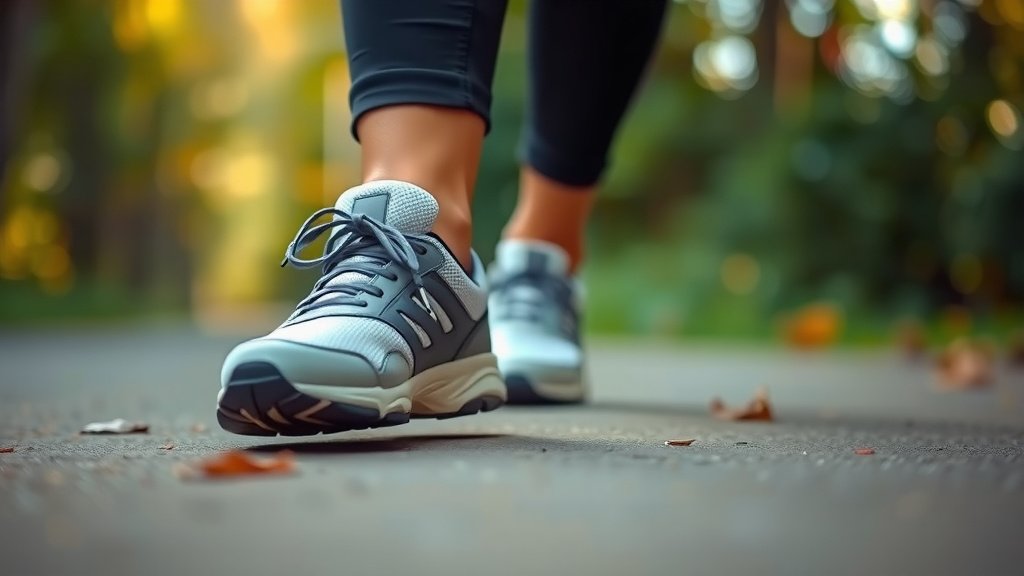
This is the question we get asked the most. The simple answer is about 300 to 500 miles. If you walk 30 minutes a day, five days a week, that is roughly every four to six months.
The midsole foam compresses with every step. Over time, it loses its ability to bounce back. We found that even if the outer sole looks fine, the inner foam can be dead. Think of it like a mattress. It looks fine on top, but after years of sleep, the springs are worn out, and your back feels it.
Your knee is the same. It feels the bottom of the shoe even if you cannot see it.
Quick Fixes for Knee Pain Without Buying New Shoes
Not ready to spend money on new sneakers? We get it. Shoes are pricey. Before you shop, try these simple adjustments.
Over-the-counter insoles are the fastest fix. We found that a simple arch support insole often corrects minor alignment issues immediately. Look for semi-rigid ones at your local pharmacy. They cost much less than a new pair of shoes.
Another quick test is to loosen or tighten your laces. Lace pressure changes foot mechanics. If your foot feels squeezed, your gait changes. A relaxed, snug fit allows your foot to move naturally without sliding around inside.
Exercises to Support Your Knee While You Find Better Shoes
Strengthening your hips and glutes takes pressure off your knees. Strong hips control how your leg rotates when you walk. If they are weak, the knee twists more.
Try this routine three times a week. Side leg raises hit the right muscles. Stand straight, lift your leg to the side, and lower slowly for 15 repetitions. Clamshells work too. Lie on your side with knees bent, open your top knee like a shell, and close it slowly. Both exercises improve stability, which supports your knee while you walk.
Combine these stretches with new insoles, and you might buy yourself some time before needing a new pair of shoes.
When to See a Doctor About Knee Pain
Sometimes, your shoes are not the whole story. If you have swapped shoes, added insoles, and still feel a sharp pain, it could be something else. It could be arthritis or a meniscus issue.
Listen to your body. If the knee swells, feels hot, or locks up, these are red flags. The CDC recommends seeing a healthcare professional for pain lasting longer than two weeks despite rest and shoe changes.
Continuing to push through severe pain can make the injury worse. A doctor can identify the actual cause and give you a proper recovery plan. It is better to be safe than to cause a long-term problem.
Conclusion
Your walking shoes can absolutely be the reason your knees ache. The fix is usually simple: check the wear on your current pair, know your arch type, and match your shoes to your stride.
Start with the basics. If your soles are worn unevenly or the heel cushion feels flat, replace them. If your shoes are relatively new, try an over-the-counter arch support insole first. That one small change often solves the problem.
Pay attention to heel drop, too. Don’t make sudden switches between high-drop and zero-drop shoes. Give your body time to adjust.
Take a look at your shoes right now. If any of the warning signs we covered are staring back at you, that’s your next step. Pick a pair that supports your specific foot type, and your knees will thank you on your next walk.
Frequently Asked Questions
Can new walking shoes cause knee pain?
Yes, they can. If you switch to a shoe with a very different heel drop or support level, your leg alignment changes.
Your muscles and joints need time to adapt. Go for shorter walks for the first week or two. If the pain persists after that, the shoe may not match your foot type.
How do I know if my shoes are too worn out for walking?
Flip them over and look at the tread. If one side is noticeably more worn than the other, your gait is off.
Press your thumb into the heel cushion. If it feels hard and doesn’t bounce back, the shock absorption is gone. Most walking shoes last about 300 to 500 miles, which is roughly every four to six months for regular walkers.
Are flat shoes or zero-drop shoes better for knee pain?
It depends on your foot type and what you’re used to. Zero-drop shoes can put more strain on your calves and knees if you switch too quickly.
If you have flat feet, you often need more support, not less. A sudden move to flat, minimalist shoes can make knee pain worse. Make any heel drop change gradually over several weeks.
Should I get custom orthotics for knee pain from walking?
Not always. We recommend trying over-the-counter arch support insoles first. They often fix mild alignment issues right away.
Custom orthotics are pricey and usually reserved for more serious structural problems. If a simple insole doesn’t help after a few weeks, then a podiatrist can assess whether custom ones are worth it.
Can walking on hard surfaces make shoe-related knee pain worse?
Yes. Concrete and asphalt don’t absorb any impact, so your shoes have to do all the work.
If your footwear is already worn out or lacks cushioning, hard surfaces will amplify the stress on your knees. Try walking on trails or a track with more give, and replace those tired shoes before hitting the pavement again.