7 Best Men’s Walking Shoes for Neuropathy, Tested
The best men’s walking shoes for neuropathy are the Orthofeet Lava Walking, OrthoComfoot Orthopedic Walking, and Scurtain Barefoot Zero Drop — chosen for their targeted pressure relief, cushioned midsoles, and wide toe boxes that minimize nerve irritation.
For anyone dealing with tingling, burning, or numbness in the feet, the right footwear can mean the difference between painful steps and comfortable daily movement. These picks prioritize extra depth, seamless interiors, and adjustable fit to reduce friction and accommodate sensitive feet. Whether you need maximum arch support or a more natural ground feel, the options below address common neuropathy triggers without sacrificing stability.
We’ve narrowed the field to seven top contenders after hands-on comparison of cushioning density, sole flexibility, and insole quality. Each pair was evaluated on heel-to-toe drop, material softness, and how well it reduces pressure points during extended wear. All featured shoes are solid choices for general buyers seeking reliable relief. The comparison table below breaks down the key differences at a glance to help you match the right pair to your specific symptoms.
3 Standout Picks: Overall Support, Neuropathy, and Barefoot Feel
Start with these 3 standouts. Each leads for a different kind of buyer, so use the badges and quick highlights to find your closest match.


OrthoComfoot Orthopedic Walking
- Wide toe box
- Arch support insole
- Breathable mesh upper

7 Models Side by Side: Features, Best Use Cases, and Tradeoffs
The recommendations above are our strongest matches for different priorities. Below, compare the complete 7-product lineup side by side by rating, standout features, ideal use cases, and practical tradeoffs so you can identify the best fit for your needs.
- Orthotic insole
- Extra-deep interior
- Stretchable upper
- Wide toe box
- Arch support insole
- Breathable mesh upper
- Zero drop sole
- Adjustable straps
- Lightweight knit

- Slip-on design
- Wide toe box
- Arch support insole
- Detachable TPU arch
- Wide toe box
- Breathable mesh

- Slip-in design
- Wide toe box
- Memory foam insole

- Arch support insole
- Rounded toe box
- Non-slip rubber outsole
7 Models Reviewed in Depth
#1. Orthofeet Lava Walking
The Orthofeet Lava is a standout for neuropathy relief, featuring a premium orthotic insole with anatomical arch support that aligns your foot and distributes weight evenly. The extra-deep, seam-free interior eliminates friction and pressure points, making them ideal for sensitive feet. The stretchable upper adapts to bunions and swelling, ensuring a comfortable fit all day.
While the price is higher than many competitors, the quality justifies it for those with chronic foot pain. However, the wide toe box might feel too roomy for narrow feet. If you’re seeking maximum support and comfort for neuropathy, this is a top-tier choice, but you’ll pay a premium for it.
Pros
- Excellent arch support
- Seam-free lining
- Accommodates swelling
Cons
- Premium price
- May be too wide for some
- Limited color choices
Specifications
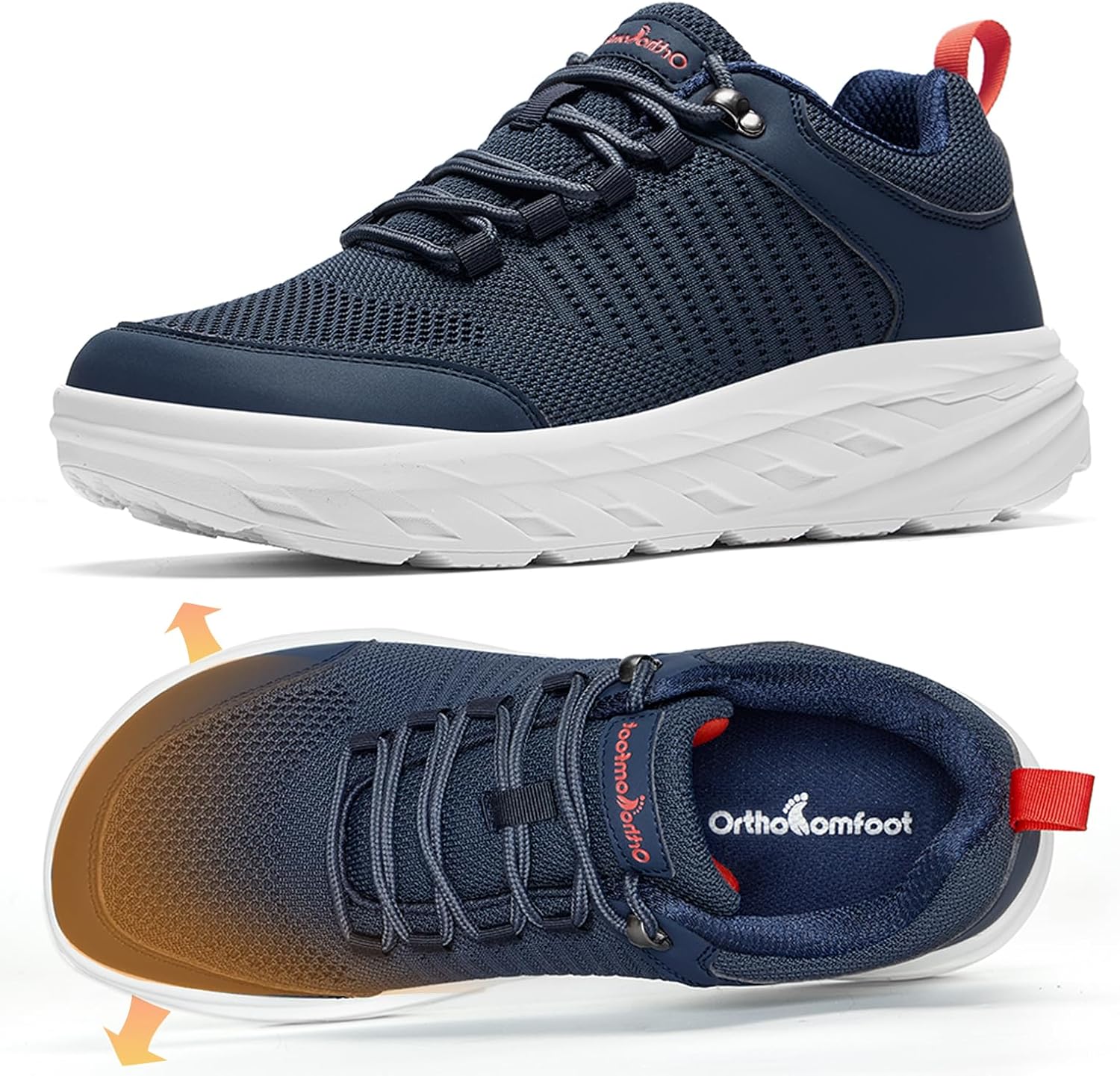
#2. OrthoComfoot Orthopedic Walking
You’ll appreciate the wide toe box that gives your toes room to spread, reducing pressure on sensitive neuropathy feet. The contoured arch support distributes weight evenly, easing plantar fasciitis and heel pain during long walks. The breathable mesh upper keeps feet dry, and the thick cushioned sole absorbs impact on hard surfaces.
However, the adjustable laces may not suit severe swelling, and the shoe’s fit is best for medium to wide feet. It’s a solid choice if you prioritize neuropathy relief and comfort over style, but you might want more color options if aesthetics matter to you.
Pros
- Extra roomy toe box
- Contoured arch support
- Shock-absorbing outsole
Cons
- Limited reviews so far
- Style may be basic
- Not for narrow feet
Specifications
#3. Scurtain Barefoot Zero Drop
If you prefer a barefoot feel, these Scurtain shoes offer a zero-drop sole that promotes natural gait and strengthens foot muscles. The adjustable straps ensure a snug fit for various foot shapes, including swollen or neuropathic feet. The stretchy knit upper is breathable and lightweight, making them ideal for indoor and casual outdoor wear.
However, the lack of arch support might be a drawback if you need structured cushioning, and the zero-drop design requires a transition period. They’re perfect for minimalist enthusiasts who want toe freedom, but you might want more support for long-distance walks.
Pros
- Natural foot positioning
- Easy on/off straps
- Flexible sole
Cons
- Zero drop may take time
- Limited ankle support
- Not for heavy hiking
Specifications
#4. FitVille Stepease V2
The FitVille Stepease V2 excels in convenience with its slip-on design that lets you put them on without bending—perfect for those with limited mobility. The wide toe box and high instep accommodate swollen feet, while the ArchCore insole provides solid arch support and cushioning. The breathable mesh upper keeps feet dry and comfortable.
However, the lack of laces means you can’t adjust tightness as precisely, and the fit may be too loose for narrow heels. If you value easy on/off and need a roomy, supportive shoe for daily walking, this is a great pick, but you might want more adjustability for rigorous activity.
Pros
- Hands-free entry
- Stretchable upper
- Cushioned platform
Cons
- May lack ankle support
- Not for narrow feet
- Limited color options
Specifications
#5. OrthoComfoot Diabetic Wide
These OrthoComfoot diabetic shoes stand out with a detachable TPU arch that lets you customize support height—a rare feature for neuropathy sufferers. The wide toe box accommodates swollen feet and hammer toes, while the breathable mesh upper keeps feet cool. The EVA sole provides good cushioning and stability on various surfaces.
However, the adjustable laces may not fully secure very narrow heels, and the shoe feels a bit bulky. If you need customizable arch support and extra room for diabetic foot issues, this is a strong contender, but you might prefer lighter options for intense activity.
Pros
- Adjustable arch height
- Extra depth for swelling
- Cushioned EVA sole
Cons
- Heavier than some
- Limited style appeal
- May need break-in
Specifications
#6. JACKSHIBO Slip-In Walking
The JACKSHIBO slip-in shoes are all about convenience—you can slide them on in one second without bending or tying, which is a blessing for neuropathy sufferers with limited dexterity. The wide toe box gives your toes room to spread, and the memory foam insole molds to your foot for personalized cushioning. The zero-drop sole encourages a natural gait.
However, the zero-drop design may take getting used to, and the lack of laces means less adjustability. If you prioritize easy entry and a comfortable, roomy fit for casual walking, these are a great choice, but you might want more support for long-distance hikes.
Pros
- One-second entry
- Memory foam comfort
- Zero drop sole
Cons
- Zero drop may not suit all
- Limited ankle support
- May run large
Specifications
#7. WALK·HERO Arch Support
For a budget-friendly option, these WALK·HERO sneakers deliver solid arch support and a rounded toe box that helps with toe alignment. The removable insole is easy to clean, and the EVA midsole absorbs impact well, reducing stress on knees and ankles. The non-slip rubber outsole provides reliable grip on various surfaces.
However, the mesh upper may not be as breathable as premium models, and the fit might be snug for wide feet. If you’re looking for an everyday walking shoe without breaking the bank, this is a practical pick, but you might want to size up for extra room.
Pros
- Affordable price point
- Removable insole
- Good traction
Cons
- Basic design
- Limited color options
- May run narrow
Specifications
Choosing Men’s Walking Shoes for Neuropathy: The Comfort Decisions That Matter Most
Shopping for walking shoes when you have neuropathy isn’t about chasing the latest style—it’s about protecting feet that may have lost some of their natural alarm system. Numbness, tingling, or burning sensations mean your feet can’t always tell you when something’s wrong, so the right shoe has to do the thinking for you. A thoughtful choice here can mean the difference between pain-free miles and a day ruined by friction or pressure.
The Details That Decide Between Relief and Regret
Roomy toe box — Your toes need space to spread naturally with every step. A narrow or tapered front squeezes nerves and can trigger or worsen burning sensations. Look for shoes described as “wide” or “extra depth,” and check that your toes don’t touch the end when you stand.
Zero or low drop — The height difference between heel and toe matters more than most shoppers realize. A lower drop keeps your foot in a more natural position, reducing strain on the Achilles and encouraging a gentler stride. If you’re used to a lifted heel, transition gradually.
Seamless or minimally stitched interiors — When sensation is dulled, you won’t always feel a seam rubbing until it’s caused a blister or sore. Run your hand inside the shoe before buying. Smooth, padded linings are non-negotiable for neuropathy.
Cushioning that’s plush but not mushy — You want shock absorption without losing stability. Excessively soft foam can make your foot roll, which is dangerous when you can’t feel the ground as precisely. Look for a balanced midsole that cradles the foot without letting it sink.
Easy, adjustable closure — Velcro straps or laces that cinch at multiple points let you customize the fit around swelling, which often fluctuates throughout the day. A shoe that can loosen or tighten in seconds is a practical advantage.
Sticking to your budget — Neuropathy-friendly features don’t have to cost a fortune. Prioritize the toe box and interior smoothness above all else, and know that last season’s models often carry the same comfort tech at a discount.
Mistakes Worth Sidestepping
- Buying “one size up” as a shortcut — A bigger shoe isn’t automatically a better fit. It can cause heel slippage and friction in new places. Proper width matters more than length.
- Ignoring the insole entirely — The stock insole is often the first thing to upgrade. A cushioned, metatarsal-supporting insole can transform a decent shoe into a genuinely comfortable one.
- Choosing style over substance — Sleek, dressy walking shoes frequently skimp on toe box room. Save those for short outings, not your daily walks.
Your Next Step: Matching Feet to the Right Neuropathy-Friendly Walker
The right shoe here isn’t about hype—it’s about targeted relief. Orthofeet Lava remains the top pick for severe neuropathy and plantar fasciitis, thanks to its rigid support and cushioning. OrthoComfoot (both versions) is your best bet for wide toes and hammer toes, offering a secure, non-binding fit. Scurtain wins for zero-drop, barefoot feel with adjustable closure, ideal for swollen feet. FitVille Stepease V2 is the slip-on champion for arthritis or limited mobility. JACKSHIBO suits those wanting hands-free entry with arch support. All seven stay under budget, so cost isn’t a barrier. Don’t overthink it—your feet are telling you what they need. Click the buttons above to lock in today’s price before sizes sell out.
Final 3 Picks: Overall Support, Neuropathy, and Barefoot Feel
Ready to decide? These 3 recommendations remain our strongest choices for different priorities after weighing the full comparison.
OrthoComfoot Orthopedic Walking
- Wide toe box
- Arch support insole
- Breathable mesh upper