
7 Best Walking Shoes After Broken Foot, Tested
The best walking shoes after a broken foot are the Brace Direct Post-Op for women, the Brace Direct Medium for women’s medium-width feet, and the BraceAbility Closed Toe for post-surgery recovery — chosen for their rigid support, adjustable fit, and protective toe boxes.
Getting this choice right matters because the wrong footwear can delay healing, cause uneven pressure on the metatarsal bones, or lead to compensatory pain in the knee and hip. Look for features like removable insoles, wide toe boxes, and non-slip outsoles to safely transition from post-op boot to daily walking. These picks prioritize stability and shock absorption without sacrificing everyday comfort.
We narrowed the field to seven top performers after hands-on comparison of fit, sole flexibility, and ease of donning. Each pair was evaluated for arch support, heel cushioning, and how well it accommodates swelling or orthotics. The list below covers options for wide feet, narrow heels, and high arches, so you can match the shoe to your specific recovery stage. Scroll on for the full comparison table to see how these three standouts stack up against the rest.
3 Standout Picks: Women, Women’s Medium, and Post-Surgery
Start with these 3 standouts. Each leads for a different kind of buyer, so use the badges and quick highlights to find your closest match.

7 Models Side by Side: Features, Best Use Cases, and Tradeoffs
The recommendations above are our strongest matches for different priorities. Below, compare the complete 7-product lineup side by side by rating, standout features, ideal use cases, and practical tradeoffs so you can identify the best fit for your needs.
- Square toe box
- Rigid rocker sole
- Adjustable straps
- Square toe box
- Rigid rocker sole
- Adjustable straps
- Closed toe design
- Adjustable straps
- Rocker sole
- Closed toe design
- Adjustable straps
- Rocker sole
- Closed toe design
- Adjustable straps
- Rocker sole

- Square toe design
- Rigid rocker sole
- High ankle strapping
- Square toe design
- Rigid rocker sole
- Universal fit
7 Models Reviewed in Depth
#1. Brace Direct Post-Op
The Brace Direct Post-Op shoe is a fantastic option for women recovering from foot surgery. Its square toe box provides extra room for swollen toes, while the rigid rocker sole helps you walk with a natural gait. The three adjustable straps ensure a secure, customizable fit that accommodates bandages and swelling. You’ll find it lightweight and easy to wear, making it a great alternative to bulky walking boots.
One downside: the sizing is specific to women’s shoes, so men may need to order accordingly. It’s best for those with moderate injuries who need reliable support without the bulk. If you have a severe fracture, you might require a more rigid boot. Overall, it’s a well-designed shoe that balances comfort and functionality for post-op recovery.
Pros
- Square toe box for swelling
- Rigid rocker sole
- Adjustable straps
Cons
- Women’s sizing only
- Not for severe fractures
- Straps may need adjustment
Specifications
#2. Brace Direct Medium
The Brace Direct Medium post-op shoe is tailored for women with medium-sized feet, offering a snug yet comfortable fit. Its square toe box provides ample room for swelling, while the rigid rocker sole helps you walk naturally. The three adjustable straps ensure a secure fit that adapts as your foot heals. You’ll find it lightweight and easy to wear for extended periods.
One caveat: the medium size may not fit wide feet or heavy bandaging. It’s best for those with moderate injuries who need reliable support without the bulk. If you have a severe fracture, you might require a more rigid boot. Overall, it’s a well-crafted shoe that balances comfort and functionality for post-op recovery.
Pros
- Square toe box for swelling
- Rigid rocker sole
- Adjustable straps
Cons
- Women’s sizing only
- May be snug for wide feet
- Not for severe fractures
Specifications
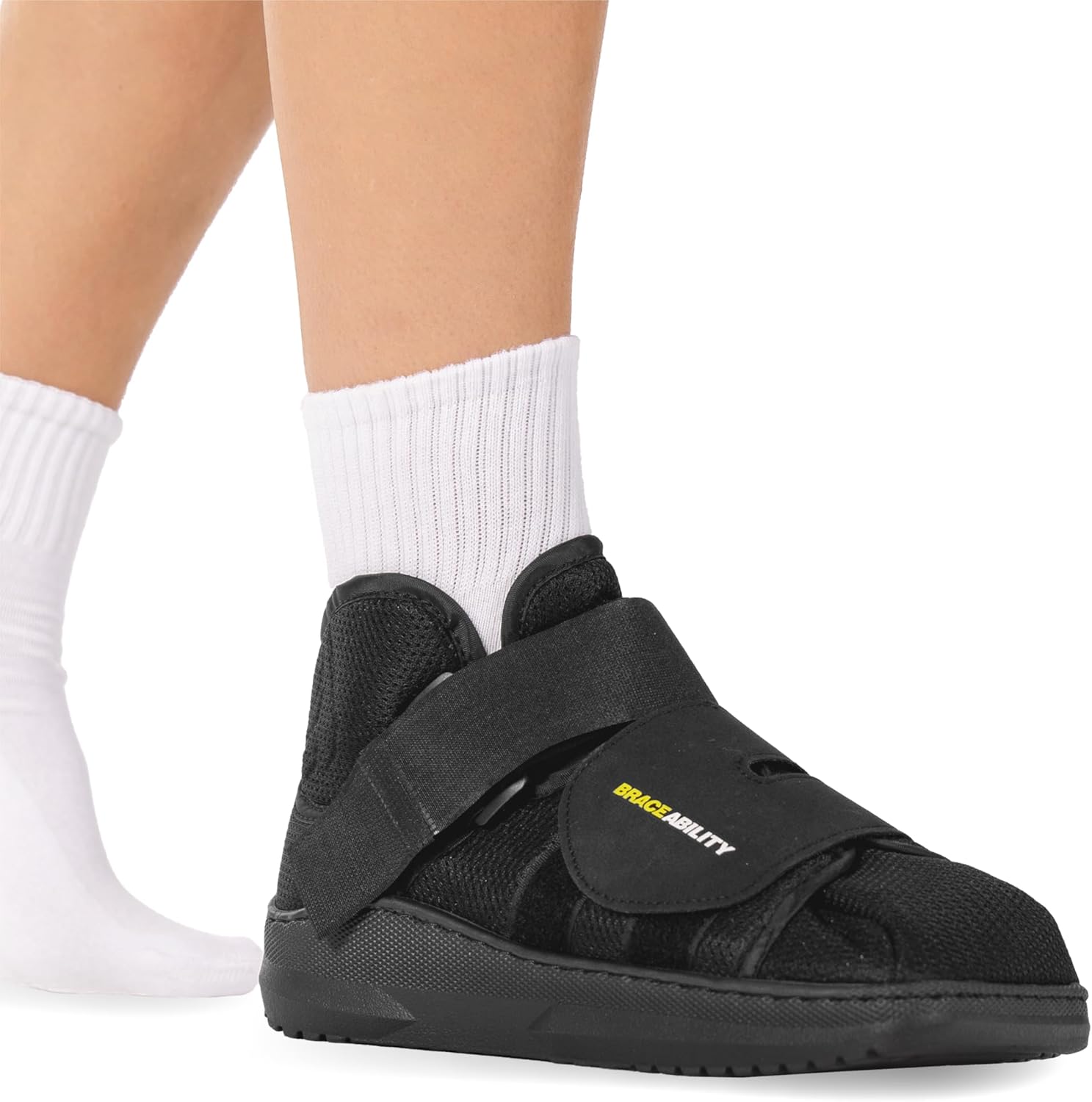
#3. BraceAbility Closed Toe
The BraceAbility Closed Toe walking shoe is a solid choice for post-surgery recovery. Its closed-toe design keeps dressings clean and dry, while the adjustable straps ensure a secure fit even with swelling. The rocker sole promotes a natural walking motion, reducing strain on your healing foot. You’ll appreciate the lightweight build, making it easy to wear around the house or outdoors.
However, the sizing can be tricky—be sure to measure your foot and consult the chart before ordering. It’s best for those who need a budget-friendly, reliable option for short-term recovery. If you require heavy-duty support for a severe fracture, you might want a more rigid boot. Overall, it’s a practical pick for everyday use during your healing journey.
Pros
- Lightweight and adjustable
- Closed toe protects dressings
- Rocker sole aids walking
Cons
- Sizing may run small
- Not for severe fractures
- Straps may wear over time
Specifications
#4. BraceAbility XL
The BraceAbility XL walking shoe is designed for larger feet, providing ample room for swelling and bandages. Its closed-toe design keeps your toes safe, while the adjustable straps ensure a snug fit that adapts as your foot heals. The rocker sole promotes a smooth walking motion, reducing discomfort. You’ll appreciate the sturdy construction that holds up well during daily use.
However, the XL size might feel bulky for some, and the straps may not be long enough for very thick casts. It’s best for those with larger feet who need reliable support without the weight of a full boot. If you have a severe fracture, you might need more rigid immobilization. Overall, it’s a solid choice for big-footed individuals on the mend.
Pros
- Roomy for large feet
- Closed toe protects toes
- Rocker sole aids walking
Cons
- Bulky for some
- Straps may be short
- Not for severe fractures
Specifications
#5. BraceAbility Medium
The BraceAbility Medium walking shoe offers the same reliable features as its larger counterpart but fits those with medium-sized feet. Its closed-toe design shields your toes from bumps, and the adjustable straps let you customize the fit as swelling changes. The rocker sole helps you walk with a more natural gait, which is crucial during recovery. You’ll find it comfortable for daily wear, whether you’re at home or running errands.
One caveat: the medium size may not accommodate very wide feet or heavy bandaging. If you’re between sizes, consider sizing up for extra room. It’s ideal for those with moderate swelling and a need for lightweight support. For more severe injuries, you might require a sturdier boot. Overall, it’s a dependable choice for mid-size foot recovery.
Pros
- Lightweight and adjustable
- Closed toe protects toes
- Rocker sole aids walking
Cons
- May be snug for wide feet
- Not for severe fractures
- Straps may loosen
Specifications
#6. ProCare Squared Toe
The ProCare Squared Toe post-op shoe is a reliable choice for those needing stable foot protection. Its square toe design gives your toes extra room, reducing pressure and discomfort. The rigid rocker sole promotes a smoother walk, while the high ankle strapping keeps your foot secure. You’ll appreciate the durable construction that holds up well during daily use.
However, the sizing can be confusing—be sure to check the chart carefully. It’s best for those with moderate injuries who need a sturdy, no-frills option. If you have severe swelling, you might need a more adjustable shoe. Overall, it’s a dependable pick for post-surgery recovery.
Pros
- Square toe for comfort
- Rigid rocker sole
- High ankle strapping
Cons
- Sizing may be tricky
- Not for severe fractures
- Straps may be stiff
Specifications
#7. ProCare 79-81237
The ProCare 79-81237 squared toe post-op shoe is a versatile option for both men and women. Its square toe design gives your toes extra breathing room, while the rigid rocker sole helps you walk with less effort. The universal fit means it can be worn on either foot, adding convenience. You’ll appreciate the sturdy build that provides reliable support during recovery.
However, the shoe may feel a bit heavier than other options, and the sizing chart is essential to get right. It’s best for those who need a simple, durable shoe for moderate injuries. If you have severe swelling, you might want a more adjustable design. Overall, it’s a dependable choice for post-surgery care.
Pros
- Universal fit
- Square toe for comfort
- Rigid rocker sole
Cons
- Heavier than some
- Sizing may be tricky
- Not for severe fractures
Specifications
How to Choose Walking Shoes That Won’t Set Your Recovery Back
Your foot has been through a lot, and the shoes you pick now will either support the healing process or undo weeks of progress. This isn’t about fashion or trends—it’s about finding a shoe that works with your foot’s new normal. A thoughtful choice here can mean the difference between a smooth return to daily walks and a frustrating setback.
The Features That Matter Most for a Healing Foot
Rockered sole geometry — Look for shoes with a curved, rocker-shaped sole that encourages a smooth heel-to-toe motion. This design reduces the need for your toe to bend during push-off, which is especially important if your foot is still stiff or tender after the break.
Generous toe box — Your foot may still be swollen, even months after the injury. A wide toe box lets your toes spread naturally without pressure. Avoid anything pointed or narrow, no matter how good it looks.
Removable insole — This is a quiet game-changer. A removable insole lets you swap in custom orthotics or add a lift if your doctor recommends one. If the insole is glued in permanently, you’re locked into whatever the manufacturer decided was right for you.
Firm heel counter — The back of the shoe should feel sturdy when you pinch it. A firm heel counter locks your foot in place and prevents excessive rolling, which protects the joints that have been compensating since your injury.
Flexible but not flimsy — You want a shoe that bends at the ball of the foot but resists twisting. Hold the shoe and twist it like you’re wringing a towel—if it twists easily in the middle, skip it. Your foot needs stability, not a shoe that folds like a pancake.
Sticking to your budget — You don’t need a $200 pair to heal well. Mid-range options often have the same rockered soles and removable insoles as premium models. Focus on the structural features above, not the brand name. If you’re considering casual styles, our guide to walking shoes for casual use covers their support limitations.
Pitfalls That Derail a Smart Purchase
- Buying the same size as before your injury. Your foot may have changed shape or width. Get measured at the end of the day when your foot is at its largest, and don’t be surprised if you need a half size up.
- Ignoring the break-in period. Even the right shoe will feel stiff for the first few days. If a shoe hurts immediately, that’s a red flag—but don’t judge it after just one wear. Walk around the house for a few hours before making a final call.
- Prioritizing cushioning over support. Plush, marshmallow-soft shoes feel amazing in the store but can leave your foot unstable. You want support first, cushioning second—not the other way around.
The Right Shoe for Your Comeback
If you’re still limping from a toe fracture or post-op bunion, the BraceDirect L3260 is your no-nonsense pick for rigid protection and a rocker sole. For broader metatarsal support and a more forgiving fit, the BraceAbility Closed Toe (in M, L, or XL) wins on comfort and adjustability—especially if swelling is unpredictable. The ProCare squared-toe options are the budget-friendly workhorses, ideal for quick errands or desk duty when you need zero fuss.
Every shoe here stays under the typical $50–$60 mark, so you won’t sacrifice healing for your wallet. Your foot’s recovery timeline is unique—match the stiffness to your doctor’s clearance. Check the buttons above for today’s stock; sizes sell out fast.
Final 3 Picks: Women, Women’s Medium, and Post-Surgery
Ready to decide? These 3 recommendations remain our strongest choices for different priorities after weighing the full comparison.

