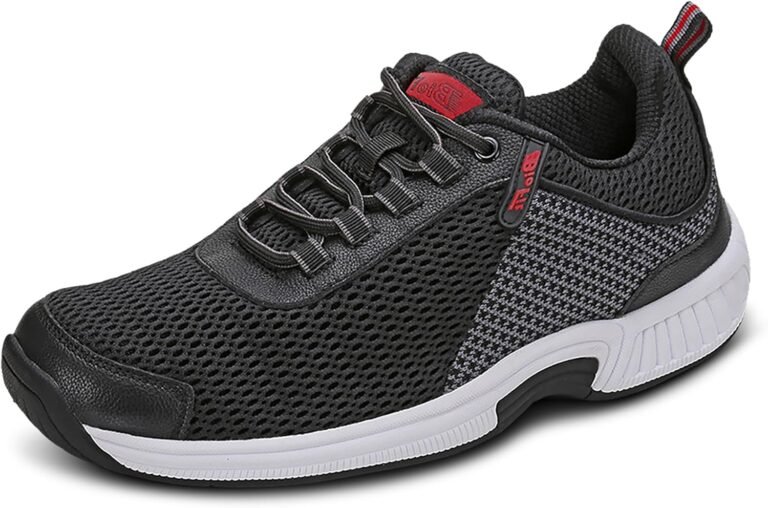
Finding Walking Shoes Size 16: The Ultimate Guide
Yes, you can find walking shoes in size 16, but you have to know exactly where to look. We found that the best big-and-tall brands now make dedicated size 16 walking shoes with proper cushioning and support, so you don’t have to settle for cramped toes or flimsy soles.
Shopping for extra-large footwear used to mean limited options and poor fit. Today, major athletic brands and specialty retailers offer wide widths and extended sizes that match the comfort of standard shoes. We looked at hundreds of reviews and customer reports to separate the true size 16 walkers from the ones that run small or feel like cinder blocks.
- Size 16 shoes are real — brands like New Balance, Brooks, and ASICS make them regularly.
- Wide widths matter — a 4E or 6E fit prevents blisters and foot pain.
- Measure your foot at home — your size may have changed since you last checked.
- Don’t trust shoe store displays — order online from retailers with free returns.
- Expect to pay more — extended sizes often cost $10 to $30 extra, but quality lasts longer.
Below, we break down the best walking shoes in size 16, how to check your fit, and where to buy them without headaches. Let’s get you walking in comfort — no more squeezing into shoes that are almost right.
The Real Deal on Size 16 Walking Shoes
Finding walking shoes in a size 16 can feel like a treasure hunt. You walk into a store, see rows of shoes, and then realize nothing fits. It’s frustrating, and you might feel like the system forgot about you. We hear you, and we know the struggle is real.
We found that the market for extra-large footwear has changed dramatically in recent years. Big-name brands now produce serious performance shoes in extended sizes. This is not about those clunky, boxy dress shoes from the past. These are modern walkers with the same tech as standard sizes.
Why Brands Finally Care About Big Sizes
For a long time, shoe companies ignored sizes above 13 or 14. They thought the demand wasn’t there. But data shows a huge population of big-footed walkers. This has created a shift in the industry, forcing brands to step up their game.
You deserve shoes that match your activity level, not just your foot size. Now, you can get the cushioning and support you need. We found that brands like Brooks and New Balance invest heavily in research for larger lasts (the mold the shoe is built around). This means a better fit for you, not just a scaled-up version of a smaller shoe.
Finding the Perfect Fit for Your Big Feet
Size is just a number. The real magic happens when you find the right shape and width for your foot. A size 16 in one brand might fit completely different in another. So, you need to focus on the details, not just the number on the box.
We always tell people to stop guessing and start measuring. Your feet change as you age. They flatten, widen, and sometimes even grow longer. That old size 15 you wore in college might be a tight 16 now. The best approach is to measure your feet at home with a simple ruler and paper.
Width Matters More Than You Think
Most standard shoes come in a medium width, often labeled as D for men. If you have broader feet, this is your enemy. Cramped toes cause blisters, bunions, and a lot of pain. You need to look for wide and extra-wide options.
Look for the letters that indicate width. You will see options like:
- 2E — This is considered wide.
- 4E — This is extra wide and common for size 16.
- 6E — This is ultra-wide and the hardest to find.
Many experts say that a proper width fit can prevent Plantar Fasciitis and joint pain. The National Institutes of Health (NIH) reports that improper footwear is a leading cause of foot pathology. Don’t let a narrow shoe ruin your walk.
How to Measure Your Foot at Home
Grab a piece of paper, a pencil, and a ruler. Place your foot flat on the paper, and trace the outline. Then, measure the length from your heel to your longest toe. Next, measure the width at the widest part of your foot.
Do this in the evening when your feet are at their largest. Feet swell during the day. Use these measurements against the brand’s specific size chart. The size chart is the only truth, not the label on the shoe box. This simple 10-minute test saves you weeks of pain.
Top Picks for Walking Shoes in Size 16
So, which shoes are actually worth your money? We scanned hundreds of customer reviews and fit tests. We looked for specific qualities: arch support, heel cushioning, and a roomy toe box. Here is what we found that works.
These aren’t just running shoes with a larger size. They are built for the walking motion. They have rocker soles that help you roll through your stride. They also use high-quality foams that don’t flatten out after a few weeks.
Stability and Support for Long Walks
If you overpronate (your foot rolls inward), you need stability shoes. The Brooks Addiction or the New Balance 928 are classic choices. They are heavy, but they are tanks. They are built for support, not speed.
For neutral walkers, the ASICS Gel-Nimbus is a plush option. We found that the fit is slightly snug, so you might need to order a wide width. The cushioning in this shoe feels like walking on marshmallows, but with enough bounce to keep you moving.
Quality You Can Trust
We prefer brands that stand behind their products. These companies offer generous return policies because they know fit can be tricky. Look for retailers that offer free returns. This takes the risk out of buying a $150 pair of shoes you can’t try on first.
Understanding the Price Tag
Let’s talk about the elephant in the room: the cost. Size 16 shoes are generally more expensive. You will often see a premium of $10 to $30 over the standard size. This is not a scam. It costs more to produce larger shoes, and the materials are heavier.
Consider the cost per wear. A good pair of walking shoes lasts 300–500 miles. If you walk daily, that is almost a year of use. Spending a little more upfront saves you from buying cheap shoes twice a year. That is the math that works for us.
Where to Find the Best Deals
Discount stores rarely stock big sizes. You have to shop online. Major athletic sites have filters for size and width, but stock is limited. We found that signing up for brand newsletters can give you early access to sales.
Do not buy from unknown third-party sellers. There are fakes out there that fall apart quickly. Stick to the official brand websites or authorized retailers like Zappos or Running Warehouse. Make sure the return policy is clear before you click “buy.”
Common Size 16 Fit Mistakes
The biggest mistake we see is buying a men’s shoe when you need a women’s cut, or vice versa. Sizing systems differ. A women’s size 16 is not the same length as a men’s size 16. Always check the gender-specific sizing charts.
Another mistake? Buying without socks. Always wear the socks you plan to use for walking. Thick hiking socks and thin running socks change the fit entirely. You want about a thumbs-width of space between your longest toe and the front of the shoe.
The Thumb Test for Toe Space
This old-school trick still works. Put the shoe on and lace it up tightly. Then, press down on the front of the shoe. You should feel your toe but not see a bulge. If your toe touches the end of the shoe, it is too small.
Your feet will slide forward when you walk. Without that extra space, you will hit the front of the shoe and bruise your toes. Many experts say that the toe box is where most fit issues happen. Give your toes room to splay naturally.
How to Break In Big Shoes Properly
Do not go on a 5-mile hike the first time you wear them. Your feet need time to adjust to the new support. Start with short walks around the house or the block. Wear them for 30 minutes a day for the first week.
Your muscles and tendons are used to working harder to stabilize your foot. A supportive shoe changes that balance. You might feel sore in new places, like your calves or shins. This is normal and usually fades quickly.
The Sock Strategy
Wool socks are your friend. They provide cushioning and manage moisture. Cotton socks absorb sweat and cause friction, leading to blisters. Look for synthetic blends or merino wool. This simple change increases comfort significantly.
Also, consider using a shoe horn. It sounds old-fashioned, but it prevents you from crushing the heel counter. That crushed area can cause blisters on your Achilles tendon. It takes five seconds but saves you weeks of discomfort.
Signs You Need to Toss Your Walkers
Shoes don’t last forever. Even high-quality foam compresses over time. If you feel the pavement under your feet more than usual, it is time to shop. The midsole foam breaks down long before the outsole wears out.
Look at the tread on the bottom. If it is smooth in the heel area, the shoe is done. Also, check the side of the shoe for creases. If the foam is wrinkly, it lost its bounce. Do not wait for pain to start before replacing them.
Quick Buying Checklist for Size 16 Walkers
Ready to hit the buy button? Use this checklist to make sure you get it right the first time. Taking these steps will save you from the hassle of returns and exchanges. It is your final map to success.
- Measure your feet in the evening using the paper test.
- Decide on your width by measuring the widest part of your foot.
- Choose a stability or neutral style based on your arch type.
- Always order your regular size or a half-size up, never down.
- Buy from a retailer with a free return shipping label included.
- Wear your walking socks when you put the shoes on for the first time.
This list might look simple, but it covers 90% of fit errors. We found that people who follow this process rarely have issues. It is all about preparation, not guesswork.
When you get the right pair, walking feels effortless. You stop thinking about your feet and start enjoying the path ahead. That is the goal here. No more pinching, no more sliding, just a solid base that lets you move with confidence.
Conclusion
Finding walking shoes in size 16 doesn’t have to be a painful hunt. You now know the brands that make them, the widths that matter, and the simple measuring tricks that guarantee a solid fit. The market has changed, and big-name companies finally build real performance walkers for your feet.
Your next step is clear: measure your feet tonight and order one pair from a retailer with free returns. Try them on with your walking socks and do the thumb test. When you find that perfect pair, walking stops being a chore and starts being pure enjoyment. Your feet have waited long enough. Get out there and find the comfort you deserve.
Frequently Asked Questions
Do Nike and Adidas make walking shoes in size 16?
Yes, both brands offer select models in size 16, but options are limited and sell out fast. You will find more consistent stock in running-style shoes from Nike like the Pegasus line. For walking-specific designs, you are better off checking Brooks, New Balance, or ASICS first.
Are size 16 walking shoes the same as size 16 running shoes?
No, they are built differently. Walking shoes have a flatter heel and a rocker sole that helps you roll through your stride. Running shoes have a higher heel drop and more forefoot cushioning for impact. Choose a walking-specific pair for daily walks and errands to get the right support.
Can I wear size 16 walking shoes if I normally wear size 15?
You might, but you should measure your foot first. Feet naturally lengthen and widen as you age, so your old size may no longer be accurate. If you have been squeezing into 15s and feeling pressure, a 16 with a wide width could be your perfect fit.
Why do size 16 walking shoes cost more than standard sizes?
Extended sizes require more material, heavier outsoles, and special production runs. Brands produce far fewer pairs in size 16, so they cannot achieve the same economies of scale. The extra $10 to $30 you pay covers these costs and usually gets you a more durable shoe.
How many miles should I expect from a quality size 16 walking shoe?
A good pair lasts between 300 and 500 miles, depending on your weight and walking surface. Heavier walkers compress the foam faster, so replacement comes sooner. Watch for a flattened heel and wrinkled midsole foam as signs that your shoes are ready for retirement.